Mahanandi

Cooking with Consciousness ~ Indi(r)a’s Recipe and Photo Journal

Cookery, Indic (4) ~ by Veena Parrikar


Usha’s Pickle Digest
by Usha Prabakaran
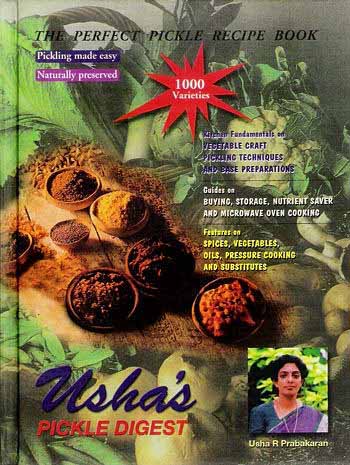
Usha's Pickle Digest
Published in 1998 by the author’s own Pebble Green Publications in Chennai, India.

It was late April and I was browsing the cookery shelves of a bookstore in Mumbai. Like all avid collectors of one thing or the other, I have learnt to quickly pick grain from chaff. My expertise is, of course, aided by the fact that the food-and-drink sections of all mainstream bookstores in India look alike: piles of publications from serial cookbook writers and compilers, a few guides to eating in city XYZ, coffee-table tomes from foreign publishers, and “chef’s series” pocket books. I rapidly scan the spines of these books, eyes peeled for the unusual or the local. That day, however, I flipped through “Cooking in Six Minutes” by one of the aforementioned copious authors. A few books down the shelf, I came across “Cooking in Three Minutes” by the same author. I wondered how far this series would go, and sure enough, out tumbled “Cooking in 60 Seconds”. Just like all problems of this world can be solved if you smile and think positively, so will you be relieved of your kitchen burdens if you think of cooking as the time that a pot spends in contact with the stove. Maybe it was the blistering summer heat or maybe I had looked at one cookbook too many, but I suddenly felt weary of the pervasive silliness of the food publishing world. For an antidote, I turned to two things: slow, sun-cooked pickles that would take days or weeks before they were ready, and a cookbook narrow in its focus, yet unmatched in range and depth.

Usha’s Pickle Digest is the definitive book for Indian pickles; the first and probably the last word on vegetarian pickles, unless the author publishes a second volume. There is not much I can say about the Digest or about Usha that has not already been said elsewhere. One vaguely knew that India has a vast repertoire of traditional pickles, but one did not know that a thousand pickles across 131 ingredients are within the realm of possibility. One had heard of mango pickles, lemon pickles, chilli pickles, tomato pickles, even okra pickles; but pickles made out of coconut, kokum, hibiscus flowers, artichokes, sugarcane, pomegranate, or spinach were beyond our imagination. All the recipes rely only on natural preservatives such as salt, oil, vinegar, and spices. The life of each pickle is indicated at the end of the recipe. There is also something very satisfying about the meticulousness with which the recipes have been titled and indexed for easy access. Even if pickles do not tickle your culinary fancies, the book offers plenty - an extensive glossary of ingredients in ten languages along with botanical names, methods to detect adulteration, buying and storage guides, and several other practical kitchen tips.

The best part of this book for me personally, however, is the profound sincerity of purpose underlying this work. The Digest was published neither for fame nor money. Usha’s patent enthusiasm and desire to share the results of her pickling research is the driving force of this book. We tend to romanticize secrecy in the culinary arts. Prized recipes and techniques are either kept shrouded in mystique or published omitting an ingredient here or instruction there. Clearly, the recipes and kitchen wisdom in this book have been developed through years of diligent and sustained effort. That she went the several extra miles to present her knowledge in a clear and forthcoming manner indeed commands our respect. It is also why we keep rummaging tons of chaff in search of a few precious grains.

Recipe: Sambaara Mango

Adapted from Usha Prabakaran’s Usha’s Pickle Digest

Ingredients:
500 grams cut raw mango, small pieces
75 grams salt (use kosher or crystal salt)
35 grams chilli powder
10 grams fenugreek seeds
10 grams cumin seeds
5 grams asafoetida
200 ml sesame oil
5 grams mustard seeds
A few sprigs curry leaves

Method:
Sprinkle salt on the mango pieces and marinate for a day. Next day, remove the mango pieces from the resulting juices (“salt water”). Reserve these juices in a refrigerator.
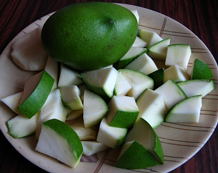

Place the mango pieces on a steel tray or thali and sun-dry for four days (till the mango pieces are three-fourths dry).
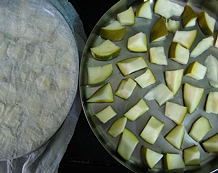
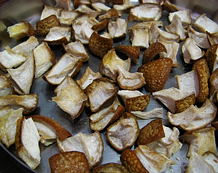
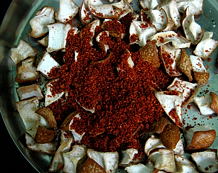
At the end of the fourth day, roast in a little oil the fenugreek seeds, cumin seeds, and asafoetida and grind to a powder. Combine with the chilli powder and add this spice-blend to the dried mango pieces.

Heat the sesame oil, add the mustard seeds and curry leaves, and allow to crackle. Pour in the salt water and an equal volume of plain water. When the mixture begins to boil, stir in the mango mixture. Let it come to a boil again, and then remove from heat.
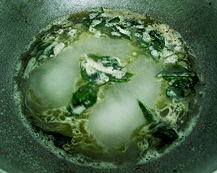
The pickle is ready to use after five days. It lasts for six months.

Notes:
I have presented the ingredients as originally provided in the book. When I prepared this pickle, however, I had neither measuring cups/spoons nor a weighing scale handy. I kept tasting throughout the process. You can adjust the spices according to your taste and the tartness of the mangoes, but please do so in a way that maintains the balance of flavours. The primary tastes in this pickle should be sour, chilli-hot, and salty.
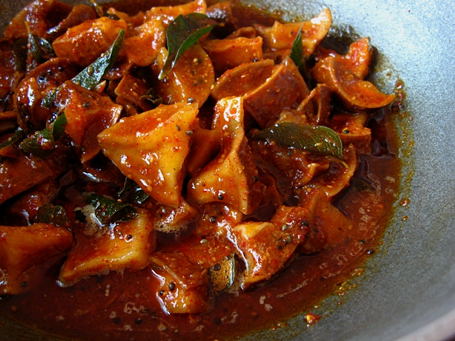
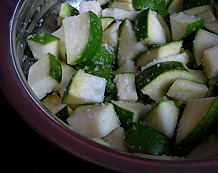
Sambaara Mango (Sundried Mango Pickle)

Text and Photographs: Veena Parrikar

Previously in the Cookery, Indic Series:

Introduction
Salads for All Occasions - Vijaya Hiremath
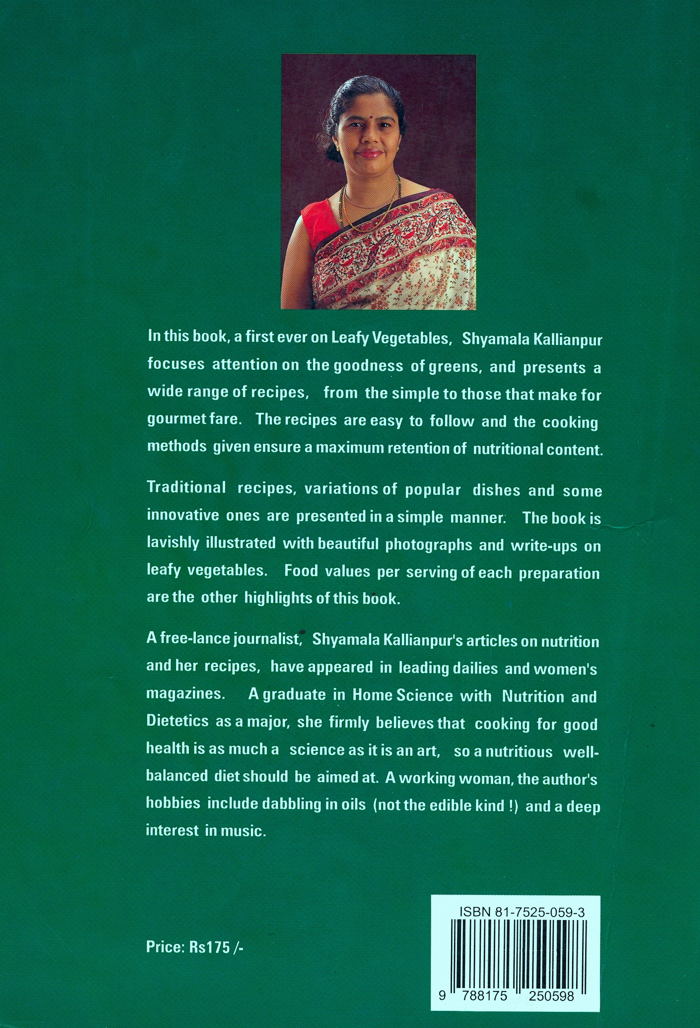
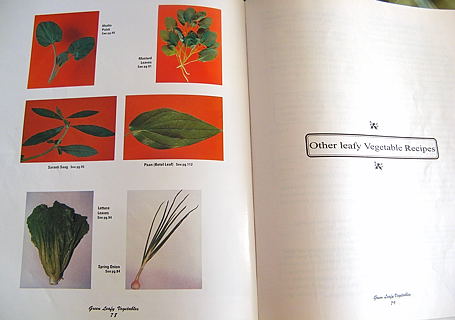
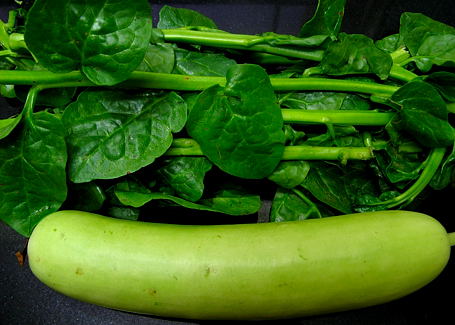
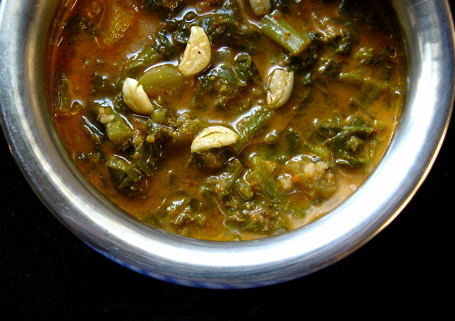
Cooking with Green Leafy Vegetables - Shyamala Kallianpur
Regional Rustic Recipes by Manipal Mahila Samaj

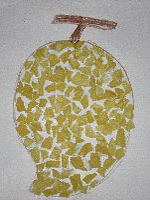
Mango Manthram: Food Art Gallery

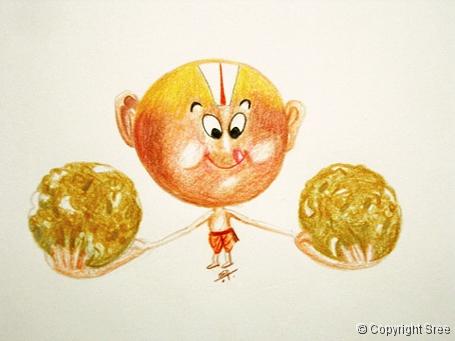
Kondapalli Bomma Decorated with Mango Motifs ~ Illustration by Indira
Kondapalli Bomma in Mango Motif ~ for Mango Manthram
(Color Pencils on Paper)

For Food Art: Mango Manthram, I chose to illustrate mango through India’s rich textile heritage. Sarees, shawls and spreads adorned with vividly decorated mango motifs are a sight to behold, and they make a treasured collection. I tried to decorate the Andhraite’s ultimate toast to feminine beauty, my childhood favorite figurine “Kondapalli Bomma” in mango motif. I have limited talent in art, so be kind, people!

There are many ways for us to become a link in the chain of memory. Like cookery, art provides a way to explore and continue the traditions. I thank my blogger friends for enthusiastically participating in “Food Art: Mango Manthram” with such great imagination.

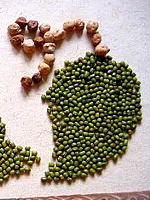
Here is mango manthram art collection. Click on the images to read the wonderful stories behind the art.

“Dear Mango, Do you Love me as much as I do thee
Do you look forward to summer, to be in your element or are you just sick and bored with all the hype
And what about all the competition, the Langda, the Himsagar, the Hapoos, running the rat race, do you really want to be there
Do you want to be the chosen one to be sent overseas or you would rather get your guts sucked out by the little boy on the dusty road
Do we even care what you think, no wonder you are sour at times but then your sunny soul takes over and you spread your warm yellow sweetness
But Mango, we really love thee.”

- from Sandeepa of Bong Mom’s Cookbook

ink, oil, pencil and watercolor:

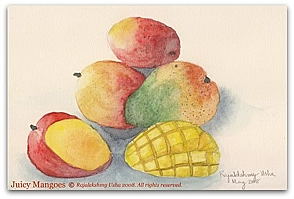
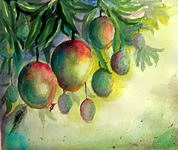
Mango Curlicue by Rajalekshmy Usha Juicy Mangoes: Watercolor by Rajalekshmy Usha

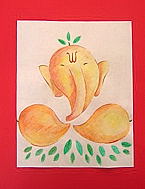
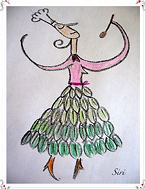
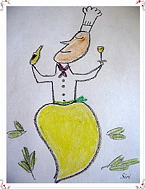
Mango Ganapathi by Anjali Damerla of Supreme SpiceMango Maama from Siri of Siri's CornerMango Ballerina from Siri of Siri's Corner

Chotumotu Mango Bhayya from Siri of Siri's CornerMango Juggler from Siri of Siri's CornerMr. Mango Mermaid from Siri of Siri's Corner

Mango by Srimathi's 4-year old daughter Moodi and Masti ~ The Lovely Mango Couple from Roma of Roma's Space

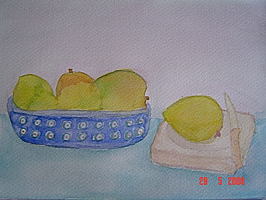
Mango Delivery Man from Srivalli of Cooking for 4 Seasons Mango Basket in Watercolor by Miel of Food and Watercolor

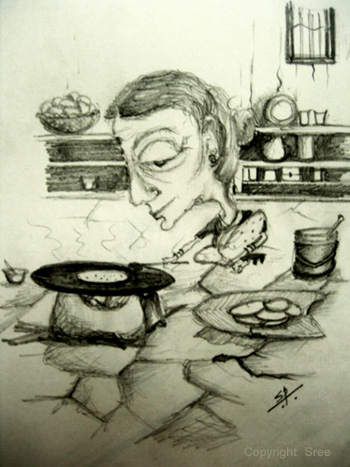
gardenofhues - watercolor on paper by Sree of Sree's Canvas Mango Motif - Indian Ink on Paper by Sree of Sree's Canvas

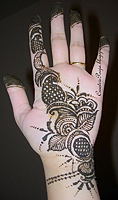
henna (mehandi, gorintaaku):

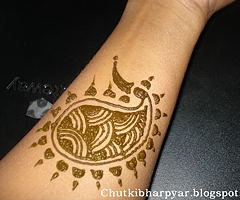
Mango Mehendi from EC of Easy Crafts Mango Mehendi from Pooja of My Creative Ideas Mango Mehendi from Asankhana

Mango Mehendi from Shubha of Chutki Bhar Pyar Mango Mehendi from Shubha of Chutki Bhar Pyar

beads and stitch:

Jewelled Mango Art from Nirmala of Amma's Special Mango Bead Work from Uma of Essence of Andhra

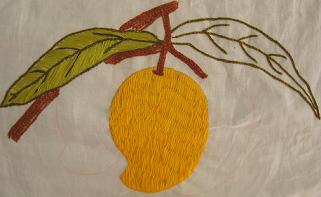
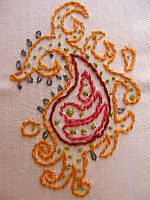
Mango Embroidery from Bonita of Curry Campaign

Mango Kutch Work from Kamala Block Painting on White T Shirt from Asankhana

Mango Embroidery from Rathna of Asvadha

decorations:

Mango Dream from Suman of Heaven's GardenMango Art from Jayashree of Spice and CurryGift Box Decorated with Mango Art from Asankhana

Mango Potholder from Priya of Live to Cook Mango Face from Sandeepa of Bong Mom's Cookbook

Mango Art with Mung Beans from DeebaMango Fruit Basket from Uma

Handmade invitation card from Veda of Kai Kriye Mango Motif on a Paper Plate from Lavi of Homecook's Recipes

Posted by Indira©Copyrighted in Amma & Authentic Andhra, Mango, Food Art (Saturday May 31, 2008 at 1:20 am- permalink)
Comments (36)

Tuning into Mandoline

My Mandoline
My 8-year old Mandoline

I tune into the radio when I am in the kitchen. The relaxing talk and tunes from radio help to make the routine job of cutting and cleaning go easy.

Just like music, mandoline is a nice thing to have in a kitchen. It makes it a breeze to prepare vegetables for salads, curries and raitas. And also for chips and bajjis. The replaceable inserts that come with mandoline are extremely useful for different styles of fine and uniform chopping. I use mandoline regularly to cut vegetables like carrots, potatoes, karela and cabbage. Also beetroot, cucumber, plantain and radish. Time saved on cabbage cutting alone makes the mandoline a must have in the kitchen, if you ask me.

Cooking can be a satisfying and enjoyable activity when we have right tools and happy vegetables. For me, a sharp mandoline with its quick and clean cutting blades is the right tool that will make chopping vegetables a happy job.

How about you? Are you a fan of Mandoline? Here are some mandoline tunes from Amazon.com (plastic and stainless steel).


Tools and Utensils from My Kitchen:

Grain Mill (Tiragali)
Sumeet Mixer and Grinder
Skillet to Preapre Pancake Puffs and Ponganalu

Modern Indian Cooking~ Cookbook Review and Recipe

Modern Indian Cooking

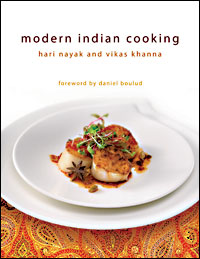
You know how it is with some cookbooks. You hold it in your hands, browse through a page or two and immediately know that you are going to enjoy preparing from it. I felt that way with “Modern Indian Cooking“, written by talented chefs Hari Nayak and Vikas Khanna.

The difference between my cooking methods and my mother and grandmother generation lies in the globalization of taste. Traditional roots, but always on the lookout for some adventure that’s appropriate to the evolving palate. Chef Hari Nayak speaks such language in Modern Indian Cooking. He uses ingredients you might not normally see together, and they work. Wonton Chat, Paneer Picatta, Grilled Chicken with Kokum Compote, Konkan Chilli Prawns, Mint Puris, Semolina Crepes, Cardamom Brownies, Pink Peppercorn Chocolate Truffles - the book is filled with clean and contemporary combinations that are grounded in commonsense.

Being into the food photography and neat designs, I want to add some comments about the quality of the book. The design and layout are pleasing to the eye. Beautiful images of classic looking food against chic background fit with the theme that these are modern versions of classics. Some of the recipes have a series of small photographs that show the ingredients and the process of cooking the food. The recipe instructions are also laid out in a clear and concise manner without overcrowding the page. All and all, Modern Indian Cooking is a pleasant cookbook to have in the kitchen, and this is the first Hari Nayak’s cookbook I have added to my collection, but it won’t be the last.


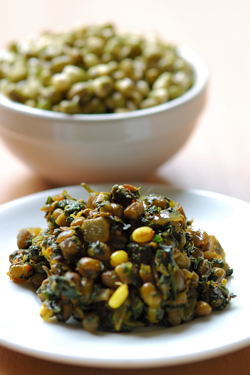
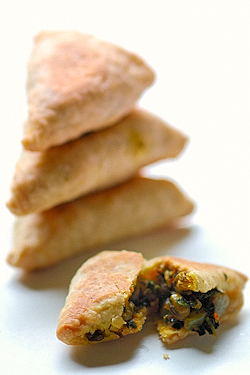
The following is a recipe from Modern Indian Cooking. Baked samosas with spinach and mung bean using phyllo pastry sheets. I’ve prepared them with sprouted mung beans for a friends get-together last weekend and they were very well received.

Samosa with Spinach and Sprouted Mung Beans
(from MIC, page 25. Makes 2-dozen samosas)

1 cup, sprouted mung beans
4 cups, finely chopped fresh spinach
½ cup, finely chopped onion
1 tablespoon cumin-red chilli powder
½ teaspoon salt or to taste
¼ teaspoon turmeric
1-teaspoon oil or ghee

Puff or Phyllo pastry sheets
(mine was from Trader Joe’s-artisan brand.)

Filling: Heat oil in a wide skillet. Add onion and sauté to pale red. Add sprouted mung beans and spinach. Cover the skillet and steam-cook. Spinach supplies moisture, and it would take about 10-15 minutes for the sprouted mung bean to become tender-soft. At this stage, sprinkle turmeric, salt and masala powder. Mix and continue cooking for another five minutes or so. Turn off the heat, and wait for the curry to reach room temperature (cool).

Samosa Wrap: Meanwhile takeout the puff pastry sheet from the freezer. Wait until they reach from stiff, cardboard like to firm but pliable condition. Place the sheet on a lightly floured work surface and evenly roll out to thin. With a sharp knife, cut the sheet to equal looking 2 x 2 inch squares. Place a teaspoon of spinach curry in each square. Quickly fold the right corner over the filling to the left side and press the edges to make a triangle. Repeat until all are done.

Bake: Place the samosas on the baking sheet. Bake at 350 F. After about 10 minutes of baking time, turn to opposite side. Bake for another 5-10 minutes, until crisp and golden. Serve warm with tamarind-date chutney or ketchup.

Baked Samosas
Baked Samosas with Spinach and Sprouted Mung Beans

Notes:
Available for purchase at Amazon, Powell’s
Book Cover is taken from Harinayak.com for review purpose.
Recommend this book to your local library.

~ Indira

Vadapappu (వడపప్పు)

Vadapappu
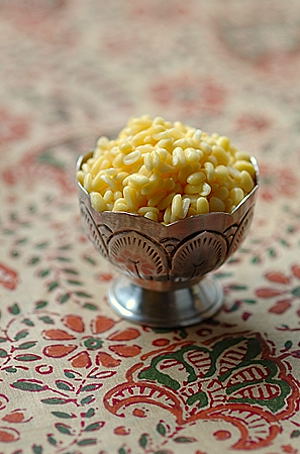
Ethereal Vadapappu

With only one ingredient, this has to be the easiest neivedyam one could prepare on a festival day. A Sri Rama Navami original classic, rehydrated yellow moong dal is a delight and goes by a special name Vadapappu.

The surprising good taste comes from the simplicity of the preparation. No cooking involved. No spices, no oil and not even salt or sugar. Just soak the moong dal in water overnight. Half cup would be enough for two people. Drain. Rinse once, and consume. The taste will be extra good when prepared with split moong dal. Follow the same principle. Soak overnight, rinse the dal in several changes of water to remove the green coverings. Like mini yellow roses peeking from a rose bush, the revealed moong dal in pale yellow color will take the breath away with simple beauty.

Vadapappu may look innocent and inconspicuous but it’s a protein powerhouse, easily digestible, and nourishing to human body.

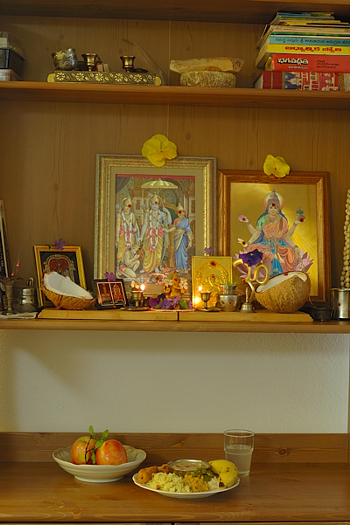
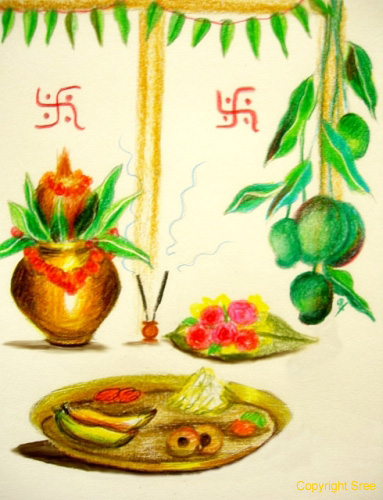
Ugadi Pooja Neivedyam

Cookery, Indic (3) ~ by Veena Parrikar


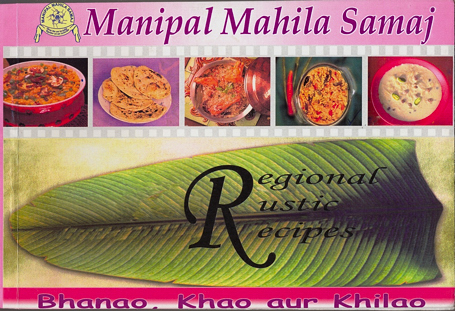
Regional Rustic Recipes
by Manipal Mahila Samaj

Published in 2007 by Manipal Mahila Samaj at Manipal, in Karnataka, India.

The cooking of our mothers and grandmothers is the bedrock of our gastronomical worlds. It feeds our memories and inspires our culinary efforts, particularly if we are separated from it by distance or, more unfortunately, death. “Just like Amma makes” is the gold standard to which most of us aspire. It is understandable, therefore, that we have forgetten a time when easy and daily access had rendered us somewhat blase about the traditional foods they prepared. We were tired of the idli breakfasts, the pumpkin koddel was boring, the maggey with jackfruit seeds was fodder for the resident comedian at family gatherings, and why, why, did we have to eat moong daal paayas on every festive occasion! What excited our palates and fired our appetites in those days were the dishes sent over by the neighboring aunties: we waited eagerly for the biryani from Salma downstairs, the fudge, marzipan, and cakes sent over by Mrs. De Souza, the sambar from Mrs. Ananthraman, the bisi bele bhaath from Mrs. Rao, the kori-rotti from Mrs. Shetty and the khakra-chunda from Mrs. Parekh. Even dishes from their failed experiments were sometimes more welcome than the daily food prepared at home. Eating out at restaurants was a luxury and street food, a surreptitious pleasure from leftover pocket money in those days, so the only way to sate our hunger for something different was the gifts from neighboring kitchens.

I was reminded of those times when I received the Manipal Mahila Samaj’s cookbook, Regional Rustic Recipes, through the good graces of a friend and old-time resident of Manipal. The Manipal Mahila Samaj publishes an annual magazine for its members; last year, they decided to compile a special issue with recipes contributed by the members. The result is a charming little cookbook with all the strengths and foibles of a homegrown production created in the spirit of community and sharing. It is a ticket to the kitchens of the neighborhood ladies of my days in India.
Back cover

The distinguishing feature of this book is the classification of recipes. Most general cookbooks, Indian or otherwise, are organized along the type or timing of the meal - breakfast, snacks, main dishes, sweets, preserves - or ingredients - rice, grains, vegetables, meat, and spices. Regional Rustic Recipes is primarily organized according to the diverse regional, religious, and linguistic backgrounds of its members. There are other cookbooks, of course, which provide recipes according to the geographical states of India. None of them, however, reflects the challenges inherent in categorizing Indian cuisines into neat boxes demarcated by simple lines of geography, religion, language, or sub-community. Thus, the book’s main chapters are organized by:

- Geography: Andhra Pradesh, Kerala, Rajasthan, Lucknow;
- Geography and language: Punjabi, Tamilian, Sindhi;
- Religion: Muslims;
- Religion and geography: Mangalore Catholics;
- Community: Goud Saraswat Brahmin; Bunt, Billava, Ganiga and Mogaveera; and
- Religious proscriptions: no onions and garlic.

Within the chapter on Goud Saraswat Brahmins, the recipes are Kerala-style, Maharashtrian, North Kanara, and South Kanara (Udupi-Mangaloreans); and within No Onions & Garlic, there are the Gujaratis, North Indian Jains, South Indian Jains, Kannadiga Brahmins and UPites (Uttar Pradesh)! Kannadigas and Gowdas sit in their own chapter, and perhaps as a nod to the mother state, there is an entire chapter on Karnataka rice items.

The recipes themselves are another strength of the book. They are tried-and-tested, authentic, and do not shy away from using exotic ingredients or difficult procedures. Make no mistake, this is a recipe exchange between cooks who have wielded the ladle for decades. Consequently, this is not a book that is intended for beginner cooks or those inexperienced in regional Indian foods. The text and layout are minimalist, and there are no photographs or sketches inside the book. Neither the contributors of the recipes nor the editors are named; I was told that this was a conscious choice because for many of the recipes, there was no way to attribute the source in an unambiguous manner. The style of writing is reminiscent of handwritten recipes with their terse instructions and use of truncated and abbreviated words such as ing, tsp, min, and pwd. Further, the errors (dagad phool and marathi moggu are said to be the same spice) do not irritate me as much as the banalities (Food is very important in Sindhi culture).

For all its minor flaws, the book is a welcome addition to the seemingly bare landscape of not-for-profit cookbooks in India. By not-for-profit, I am referring to books published by local temples or churches, community organizations, and women’s associations or other groups, with the express purpose of raising money for a social cause or spreading awareness about a particular type of diet or cuisine. I cannot explain my fascination for such cookbooks - perhaps it is the community effort, the sincerity of purpose, or the local flavours that are sprinkled in these works. Over the last year, I have managed to collect some such books by scouring used bookstores and old paper marts in India. The pickings, however, have been slim compared to the volumes of such (non-Indian) publications seen at used-book sales and stores in the United States. Granted that these types of books are typically published in single editions on a small scale with limited distribution; hence, they go out of circulation very quickly. Perhaps the U.S. systems just do a better job of retrieving old copies of such books. It is probably not a stretch, though, to say that there is room for much more activity and many more books in this sphere in India.

Recipe: Marsoppu

Adapted from Manipal Mahila Samaj’s Regional Rustic Recipes, Chapter: Kannadigas and Gowdas

Ingredients:
Green chillies - 4 to 5
Garlic - 5 to 6 cloves
Onion - 1
Tomatoes - 2
Water - ½ cup
Mixed Greens - 1 cup
Toor daal - ½ cup
Fresh grated coconut - ½ cup
Salt to taste

For Seasoning:
Oil - 1 teaspoon
Mustard seeds - ½ teaspoon


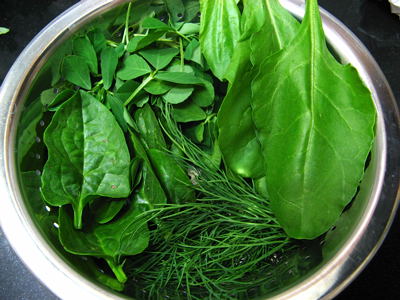
Mixed greens: Fenugreek (methi), spinach, dill (shepu), Malabar or Indian red spinach (basaLe)


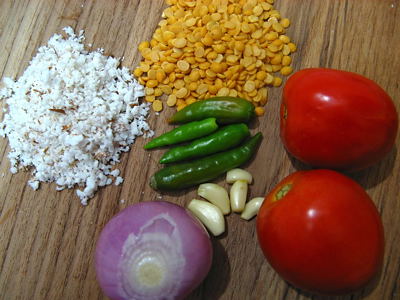
Clockwise from 12 o’clock: toor daal, tomatoes, garlic, onions, coconut. Centre: green chillies

Method:
Cook the toor daal and set aside. Roughly chop the green chillies, garlic, onions, and tomatoes. Place in a saucepan or any other cooking vessel along with a half cup of water. Cook until the vegetables are soft (about 5-10 minutes) and remove from heat. Remove the cooked vegetables with a slotted spoon, leaving the liquid in the saucepan. Once the vegetables are cool, add the coconut and grind to a paste. Add the roughly-chopped greens to the reserved liquid, and cook the greens until wilted. Cool them and run them through a mixie just once. Mix the cooked daal, the coconut-vegetable paste, and the roughly ground greens in the same saucepan, add salt, and bring it to a boil. Remove from heat. Do the tempering as usual: heat the oil, add the mustard seeds and let them splutter. Add this mixture to the daal-greens mix.

Notes:
I modified the original recipe by reducing all ingredients, except the greens, by half. While I have encountered several recipes with daal, greens, and vegetables, I like the separate cooking processes adopted here as it accounts for the differing cooking durations required for each ingredient. The complete absence of powdered spices also scored a few more points in my book. The original recipe made no mention of salt, which is probably an oversight.


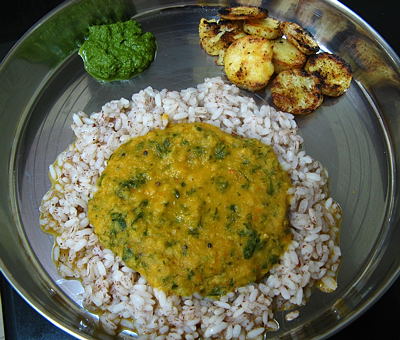
Marsoppu served with red rice, wild tuber chips, and radish-greens chutney

Text and Photographs: Veena Parrikar

Previously in the Cookery, Indic Series:

Introduction
Salads for All Occasions - Vijaya Hiremath
Cooking with Green Leafy Vegetables - Shyamala Kallianpur

Previous Page » 
 

Click here to visit VedaBooks.com Veda Books.com

Click here to enter Haldiram's Store Haldiram's Store

Click here to visit and learn from Chef and Cookbook Author Harinayak Click here to visit Harinayak.com Harinayak.com

Click to Visit Awesome Cuisine Website Awesome Cuisine

Click here to enter Indus Ladies forum Indus Ladies.com

click here to visit Supreme Spice Online Store About Supreme Spice

India Cookery, Food Stock Photography: Click to Browse, Digital Download and Print the Food Photographs Food Stock Photography

Mahanandi Selections: Shop at Amazon.com to Support Mahanandi Browse Amazon.Com

Amazon... Paypal...