Mahanandi

Cooking with Consciousness ~ Indi(r)a’s Recipe and Photo Journal

Mango Mung Kosambari


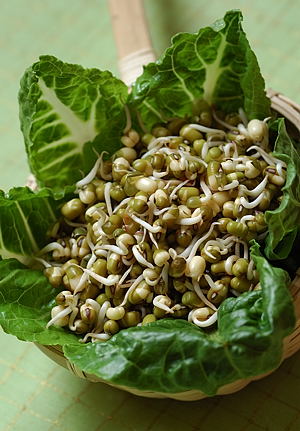
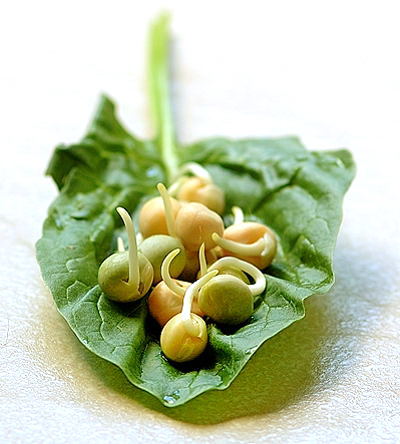
Sprouted Mung Beans and Romaine Lettuce

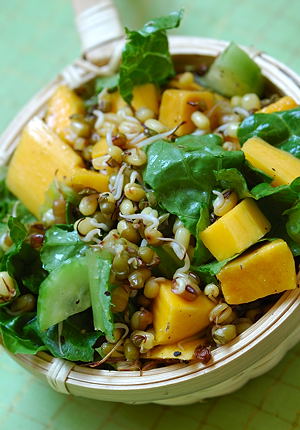
Kosambari with mung bean sprouts and ripe mango. All I can say is “Yum”! I love mung bean sprouts and I love mangoes. And when I can get both fresh, this is the kosambari to prepare. With a cup of rasam or sambhar on the side, this makes an excellent hot weather meal.

Mung bean sprouts: you can easily sprout your own. Just soak the mung beans overnight. Next morning, line a colander with muslin cloth. Drain the water and cover the beans with the cloth loosely. Keep the cloth moist, and within a day or two, you see the growth. Rinse and add the sprouted beans to recipes.

Mango Mung Kosambari
(for two, for one meal)

1 ripe mango - peel, cut to bite sized cubes, about a cup
Mung Sprouts - one cup, (raw is good. if you prefer, lightly sauté)
1 hand length cucumber - peel and cut to bite sized cubes, about a cup
6 fresh romaine lettuce leaves - wash, and tear or cut to small pieces

Take them all in a big bowl. Add about half cup of homemade yogurt. Also pinch of salt and black pepper. Combine gently. Serve.


Mango Mung Kosambari ~ for Morning Meal Today

Recipe source: My creation

Modern Indian Cooking~ Cookbook Review and Recipe

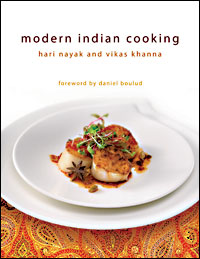
Modern Indian Cooking

You know how it is with some cookbooks. You hold it in your hands, browse through a page or two and immediately know that you are going to enjoy preparing from it. I felt that way with “Modern Indian Cooking“, written by talented chefs Hari Nayak and Vikas Khanna.

The difference between my cooking methods and my mother and grandmother generation lies in the globalization of taste. Traditional roots, but always on the lookout for some adventure that’s appropriate to the evolving palate. Chef Hari Nayak speaks such language in Modern Indian Cooking. He uses ingredients you might not normally see together, and they work. Wonton Chat, Paneer Picatta, Grilled Chicken with Kokum Compote, Konkan Chilli Prawns, Mint Puris, Semolina Crepes, Cardamom Brownies, Pink Peppercorn Chocolate Truffles - the book is filled with clean and contemporary combinations that are grounded in commonsense.

Being into the food photography and neat designs, I want to add some comments about the quality of the book. The design and layout are pleasing to the eye. Beautiful images of classic looking food against chic background fit with the theme that these are modern versions of classics. Some of the recipes have a series of small photographs that show the ingredients and the process of cooking the food. The recipe instructions are also laid out in a clear and concise manner without overcrowding the page. All and all, Modern Indian Cooking is a pleasant cookbook to have in the kitchen, and this is the first Hari Nayak’s cookbook I have added to my collection, but it won’t be the last.


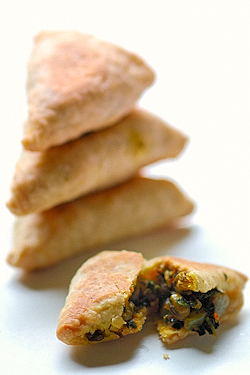
The following is a recipe from Modern Indian Cooking. Baked samosas with spinach and mung bean using phyllo pastry sheets. I’ve prepared them with sprouted mung beans for a friends get-together last weekend and they were very well received.

Samosa with Spinach and Sprouted Mung Beans
(from MIC, page 25. Makes 2-dozen samosas)

1 cup, sprouted mung beans
4 cups, finely chopped fresh spinach
½ cup, finely chopped onion
1 tablespoon cumin-red chilli powder
½ teaspoon salt or to taste
¼ teaspoon turmeric
1-teaspoon oil or ghee

Puff or Phyllo pastry sheets
(mine was from Trader Joe’s-artisan brand.)

Filling: Heat oil in a wide skillet. Add onion and sauté to pale red. Add sprouted mung beans and spinach. Cover the skillet and steam-cook. Spinach supplies moisture, and it would take about 10-15 minutes for the sprouted mung bean to become tender-soft. At this stage, sprinkle turmeric, salt and masala powder. Mix and continue cooking for another five minutes or so. Turn off the heat, and wait for the curry to reach room temperature (cool).

Samosa Wrap: Meanwhile takeout the puff pastry sheet from the freezer. Wait until they reach from stiff, cardboard like to firm but pliable condition. Place the sheet on a lightly floured work surface and evenly roll out to thin. With a sharp knife, cut the sheet to equal looking 2 x 2 inch squares. Place a teaspoon of spinach curry in each square. Quickly fold the right corner over the filling to the left side and press the edges to make a triangle. Repeat until all are done.

Bake: Place the samosas on the baking sheet. Bake at 350 F. After about 10 minutes of baking time, turn to opposite side. Bake for another 5-10 minutes, until crisp and golden. Serve warm with tamarind-date chutney or ketchup.

Baked Samosas
Baked Samosas with Spinach and Sprouted Mung Beans

Notes:
Available for purchase at Amazon, Powell’s
Book Cover is taken from Harinayak.com for review purpose.
Recommend this book to your local library.

~ Indira

Cookery, Indic ~ “Salads For All Occasions” by Vijaya Hiremath

Recipe: Sprouted Wheat and Spinach Salad

Salads for all Occasions by Vijaya Hiremath
Published in December 2005 by Jaico Publishing House

Traditionally, salad or koshimbir has formed a small part of main meals in India, taking its place alongside pickles and chutneys. This probably explains why preparing salads has always flummoxed me. Grains, vegetables, and lentils formed a complete meal, and salads were the step-children on my thali. I managed with the usual suspects - chopped tomatoes and onions with a splash of lemon juice and salt; grated cabbage and crushed peanuts with a splash of lemon juice and salt; steamed beetroot and grated carrot with a splash of lemon juice and salt; *yawn* and so on. I did not fare any better at the elaborate salad bars in U.S. restaurants and cafetarias. With the seemingly endless choices, one never quite knows when and where to stop piling one’s bowl. The end result was always a mishmash of ingredients, all of which I savour individually, but were disastrous together. I also have a distaste for the usual dressings, based as they are in oil and vinegar.

I was not interested in the plethora of salad books found in the American bookstores. Since our main meals at home are always Indian, I needed a book that used Indian ingredients, and produced flavours that would not clash with the other parts of our meal. I had purchased Varsha Dandekar’s Salads of India many years ago, and while it is an excellent cookbook in other respects, it is not about salads. Most of the dishes were really sukhi bhaji (dry vegetable preparations without gravy). There are other books on salads published in India, but they usually just reproduced Western salads. Vijaya Hiremath’s book, which I almost ignored at the bookstore due to the rather bland title, has ended my days of salad ennui.

The book is completely vegetarian, with over 50 salad recipes using a wide variety of easily-available ingredients. Sprouts prepared from whole grains and beans play a prominent role in many recipes, a feature which raised the book several notches in my estimation. Hiremath presents several fresh and innovative combinations of vegetables, fruit, greens, nuts, and sprouts. For example, Country Garden Salad, a jaded menu item that evokes images of limp lettuce and cottony tomatoes, appears in an elegant and attractive avtaar in this book. It is made with tender fenugreek leaves, white radish, carrot, cucumber, tomato, onion, and roasted sesame seeds and dressed with lemon juice, minced garlic, fresh grated coconut, cumin powder, and salt. The dressings are sauces prepared from fruit, vegetables, or dahi; chutneys or dry masala powders. The layout of the book is user-friendly: one recipe per page with the nutritive value for each recipe provided at the bottom. There are plenty of photos, which are mercifully devoid of Indian artifacts and fabrics cluttered around the food.

The recipes use a combination of weight and volumetric measurements, which might pose a problem for those readers used to measuring in cups and do not own a kitchen scale. The instructions are terse and lacking in nuances. For example, greens and vegetables being used in salads must be properly rid of excess water after washing them; otherwise, it dilutes the dressing. Novice cooks might not realise this and the recipes do not include such instructions. The book also suffers another deficiency that is common to some cookbooks produced in India: absence of an index, which forces you to scan the entire table of contents if you are pondering over what to prepare with a particular ingredient. Each recipe, with calories ranging from 250 to 350, is supposed to provide one meal for a single person; but, small eaters might find the quantity too large to be consumed in one sitting. All these drawbacks, however, are minor irritations and easily overlooked once you taste the delicious and nutritious salads made from this book.

Veena Parrikar


Sprouted Wheat and Spinach Salad

From: Salads for All Occasions by Vijaya Hiremath

Ingredients
100 gms wheat sprouts
100 gms carrot
100 gms tomato
100 gms cabbage
1 cup spinach leaves

Seasoning
2 flakes minced garlic
1 tsp roasted sesame seeds
150 gms thick curds (dahi)
Salt to taste

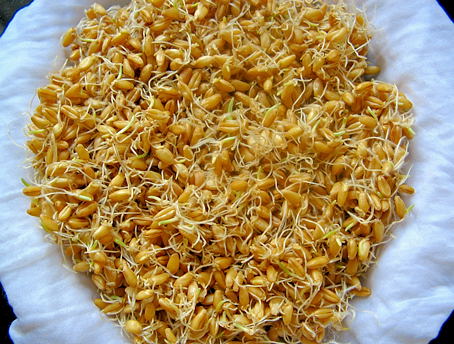
Sprouted Wheat
To prepare sprouted wheat, soak them overnight in plenty of water. Next morning, drain the wheat, and place the grains in a clean muslin cloth. Hang the muslin around your kitchen sink tap, and sprinkle the cloth with water. The wheat should sprout in two to three days in mild to warm weather. During this period, sprinkle water occasionaly if the muslin looks dry.

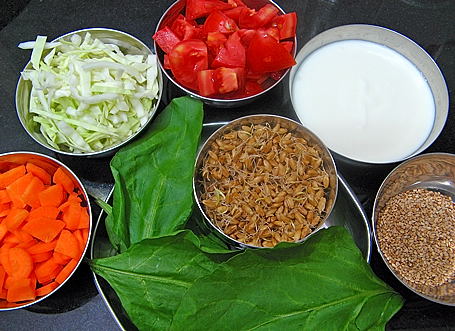
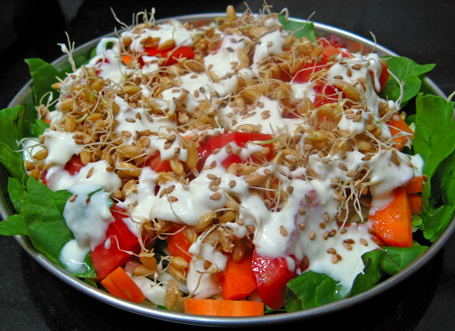
Centre: Spinach and sprouted wheat. Clockwise from left: carrots, cabbage, tomatoes, dahi with minced garlic and salt, roasted sesame seeds.

Method
1. Shred cabbage finely. If spinach is tender, use whole leaves; otherwise chop roughly or break into pieces with your hands.
2. Cut carrot into small pieces.
3. Quarter tomato.
4. Beat curds. Add garlic and salt and mix well.
5. Combine vegetables with sprouts.
6. Arrange spinach leaves on a flat dish.
7. Spread vegetable mixture over the spinach.
8. Pour curd mixture over the vegetables.
9. Sprinke sesame seeds before serving.

Sprouted Wheat and Spinach Salad

Of Being and Becoming~ Ragi Idlis

by Janani Srinivasan

Students and Rasikas of Karnatic classical music who fondly (or not :) ) recall their first tentative forays into “Sarali” and “Janta Varisais” might also remember that the credit for a creating a pedagogy of Karnatic classical music goes to Sri. Purandaradasa. And if your mother was a particularly determined woman, you may even have dutifully trotted out works from his corpus to bored admiring relatives come socio-religious occasions like Navarathri and Varamahalakshmi Vratha gatherings.

Whether it is Ratnakara the bandit turned into the Adikavi Sri.Valmiki Muni, or Angulimala the grisly finger-slicing highway terrorist turned Buddhist monk, tales of what can fairly be called instantaneous and extreme spiritual makeovers have captured the imaginations of generations of Indian story tellers and their listeners for centuries. The narrative arc usually progresses along the lines of hopelessly-and-diabolically-evil-person reaches the apogee of his (supported usually by a silently long-suffering her) evilness when a chance encounter; usually in the form of divine grace; completely awakens and transforms said individual. They then attain a sort of mythic stature and are held up as role models for future generations to emulate. Indeed, the story of the rapaciously greedy miser-turned musician-mystic Sri Purandaradasa is a familiar and inspiring one to many of us who grew up listening to these tales. Wiki weighs in with a more complete history of Sri Purandaradasa.

Stamp Commemorating Sri Purandaradasa

In our family, one of our all-time personal favourites from his oeuvre remains the haunting “Ragi Tandira”. Kannada speakers will identify with the clever punning on the word “Ragi”. Much like a Zen koan, the lyrics here have layers of meaning couched in seemingly quotidian references.

Indeed it is not hard to surmise that Purandhara dasa, once he became a wandering minstrel after giving up his former materialistic life, must have still been intimately familiar with the kind of people that once made up his close family and friends circle. Hence, his desire to show them the path to a more richer inner life must have been tempered with the practical consideration that they might reject his message if he was too heavy handed or preachy.

This composition opens with the poet singing, “Have you brought Ragi for alms?” He then goes on to describe Ragi in glowing adjectives “Yogyaragi , Bhogyaragi” and so on… While in one sense, it can be read as an extolling of Ragi, the staple local grain, the sustainer of life itself with various adjectives: Yogya (worthy) + Ragi, Bhogya (enjoyable) + Ragi ; on another level, it is a veiled injunction to the householders themselves to become “worthy”, “Yogyaragi” as one word.

Here the notion of “Yogyatha” like many words in the vernacular, defies simplistic translation. It is a conflation of many shades of meaning conveying a sense of worthiness, deservingness, etc. The rest of the song progress in the same vein exhorting us to various acts of goodness like offering food to the needy (anna chatrava nittavarAgi), attaining fame for the right reasons (kyathiyali migilAdavarAgi) and cautioning us to stay away from inethical practices (anya varthegaLa bittavarAgi) and so on.

So as homage to Sri Purandharadasa, his beloved Vittala and the ancient grain sustaining generations of his people; here is my mother’s recipe for Ragi Idlis. What a song and dance over a simple grain you say? Well, just try these. Like a mother’s love, these are earthy and wholesome. In a word, Perfect!
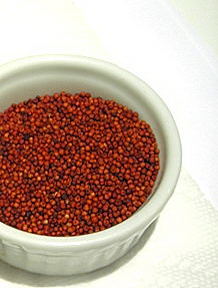
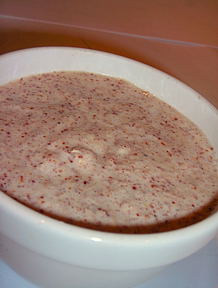
Ragi Grains Ragi Batter for Idlies
Ragi Grains ……………………. Sprouted Ragi and Rice Batter for Idlies

Recipe:
(Makes atleast 2 dozen of the standard sized Idlis- but quantity yielded depends on the Idli mould size.)

Whole Ragi Grain- 1 cup
(I sprouted these for added nutritional benefits. But it’s not strictly necessary)
Idli rice (parboiled) – 1 cup
Whole skinned Urad dal – ¾ cup
Methi seeds -1 tablespoon
Salt to taste
Sesame oil- to grease idli moulds (I used “Idhayam” brand)

After multiple washes, soak the Ragi for a day. Drain and let it rest for another day till you see tiny white sprouts. Alternatively, you can skip the sprouting and just soak the ragi for 3-4 hours longer than you soak the rice. Soak rice, whole urad and methi seeds in separate containers for 4-6 hours or overnight.

In a wet grinder or a mixie /blender, grind the urad dal till light and fluffy. A test for fluffiness is to keep a bowl of water and drop a tiny pinch of batter. If it floats, it is light enough. Then add and grind the Ragi grains and Methi and finally the rice. Take care that the rice should not be ground too smooth. It should be of rice Rava consistency. Alternatively, you can use rice Rava instead. Take the batter in a vessel, fold in some salt to taste and leave it overnight to ferment. I found that the dough fermented really well, doubling up and overflowing the vessel. So take adequate precautions.

Next morning, lightly stir the well fermented batter. Grease Idli moulds and steam in a pressure cooker for 12-15 minutes till done. Ragi idlis can be served with a dollop of butter or ghee on top, along with the usual fixings on the side: sambar, coconut chutney and/or Milagai Podi.

~ Article by Janani Srinivasan
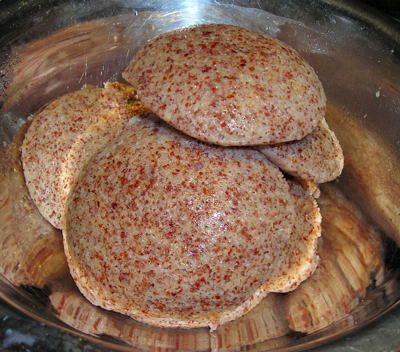

Light and Soft Ragi Idlies

Notes:
Audio of Ragi Tandira sung by the late Sri. Maharajapuram Santhanam in Raga Kalyanavasantham - Link.
Ragi pronounced with “Ra” as “raa”, “G” as in God not as in gentle, “i” pronounced “ee”.
Tandira pronounced Thundheera with the “h” NOT aspirated. “T” and “d” sounds softened not sharp as in the common American/English usage and the “an” is pronounced “un”.
Janani Srinivasan’s articles on Mahanandi: It’s Chakalaka, Baby!, The Arisiupma Trilogy.
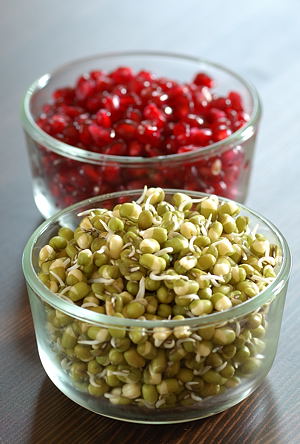
Mooga-Gaathi with Moong Bean Sprouts

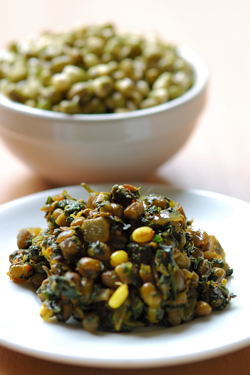
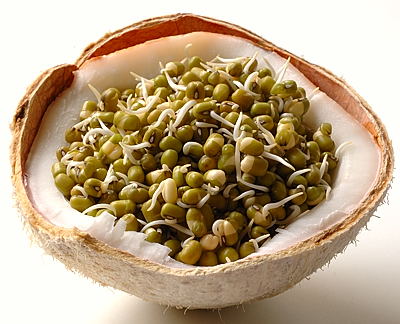
Sprouted Moong Dal and Fresh, Tender Coconut
Fresh, Tender Coconut and Moong Beans, Sprouted at Home

Mooga-Gaathi, a traditional Goan-Konkani recipe with sprouted moong beans and fresh coconut may sound like another unassuming moong dal preparation. But you would be delighted to find out the appetite-arousing attitude of this homey, gentle sounding dish. All thanks to spices - nutmeg, cloves, coriander and peppercorn.

The recipe is from my friend Veena Parrikar’s kitchen. I made small changes here and there to the original to suit my taste. Easy to prepare, minimum work, no cutting or slicing things, and satisfying results. A perfect autumn recipe and a must try for sprouted moong bean fans. I totally recommend.


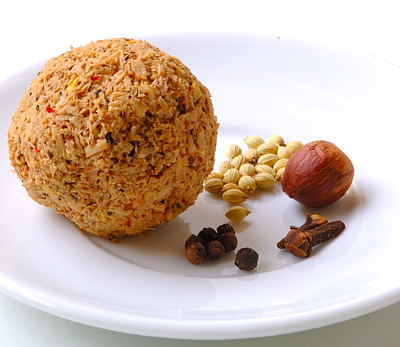
a Round of Ground Coconut and Spices - Black Peppercorn, Cloves, Nutmeg and Coriander Seeds

Recipe:
(for two, for two meals)

Sprouted moong(mung) beans - 4 cups
Fresh coconut gratings - 2 tablespoons
Spices:
Nutmeg - a small piece
Cloves - 3
Coriander seeds - 1 teaspoon
Black Peppercorn - ¼ teaspoon
Dried red chillies - 2
Tamarind pulp - 2 teaspoons
Turmeric - ¼ teaspoon
Salt - ½ teaspoon or to taste
For popu or tadka:
1 tablespoon ghee or oil
8 curry leaves
¼ teaspoon each - cumin, mustard seeds and asafoetida

1. Place a wide pot on stove-top and heat.
Add and dry-roast the nutmeg, cloves, coriander seeds, black pepper and dried red chillies to fragrance. Remove them to a mixer. Add fresh coconut and grind to smooth paste. For easy blending, you could also add about half cup water.

2. In the same pot, take sprouted moong beans. Add about 2 to 3 cups of water and stir in salt. Cover and cook. When moong beans reach required level of tenderness, add the ground-spice paste, tamarind and turmeric. (I also added a tablespoon of jaggery.) Mix well and simmer on medium heat.

3. While the moong is simmering, do the popu or tadka. In a small skillet, heat oil until a curry leaf tossed in it sizzles. Add and toast curry leaves to pale gold. Next goes the cumin, mustard seeds and asafoetida. Wait for the mustard seeds to splutter. And, immediately add the skillet contents to simmering moong dal. Mix, reduce heat and simmer for another five to ten minutes to blend the flavors.

Serve or spoon into a small bowl and enjoy with rice or chapatis.


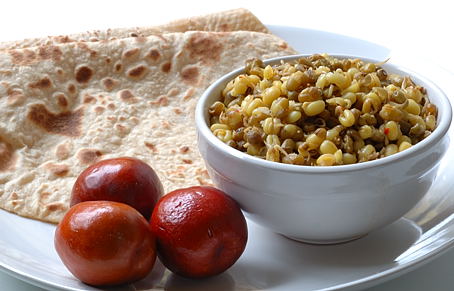
Mooga-Gaathi with Chapatis and Jujebe Fruits (Gangiregi Pandlu) ~ Meal on a Autumn Day

Notes:
The original recipe did not have cumin seeds in tadka/popu. They are not used in gaathi.
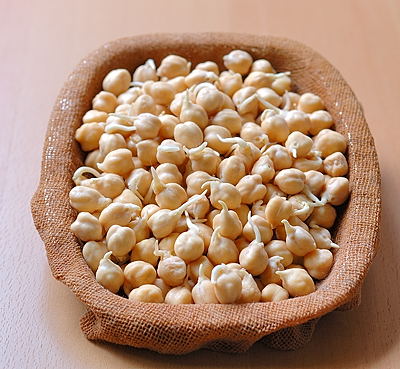
How to sprout Moong Beans: Soak moong beans in water overnight. Next morning, drain into a muslin covered colander. Cover the beans with cloth, and keep the colander in a warm area. Sprinke water occasionally to keep the cloth moist. Within a day, you start seeing the sprouts. Wait for next morning. There you go, you have your own homemade sprouts ready for Mooga-Gaathi.

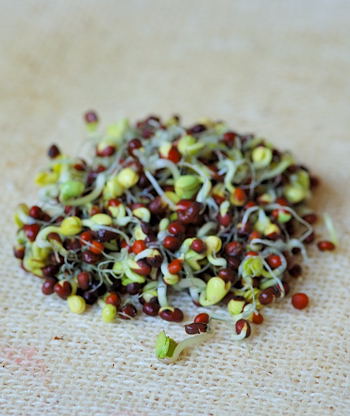
Series of Sprouts ~ Mustard Seed Sprouts


Sprouted Mustard Seeds (Aavalu)

One thing I did not expect from mustard seed sprouts was spiciness. God, they are hot. I don’t know how many of you had the experience of paan-supari. The tongue tingles and burns at the same time, right? Mustard seed sprouts had the same effect. It starts with a bitter taste and then within few seconds, the whole tongue will feel like it’s on fire, ending with a chilled sensation. I liked the mustard sprouts ruchi.

The sprouting process was easy. Soak couple of teaspoons of mustard seeds in water for four hours. Drain the water and take the soaked mustard seeds in a loosely woven cotton cloth. Place it in a colander near windowsill where the Sun shines. Frequently spray water to keep the seeds and the cloth moist. Within a day, the sprouts start to appear. Wait another day for them to grow little bit. Then add them in curries, kurmas, raita and in popu or tadka. When added in moderation, mustard sprouts surely perk up a mature palate with rustic pungency.

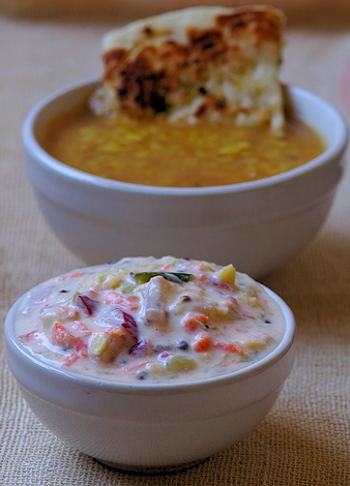
For today’s meal, I prepared a yogurt based salad with mustard sprouts for parathas. Cucumber, carrot, mango, sweet onions, asafoetida, red pepper and salt mixed in yogurt; the poor mouth is still recovering from the flavor-jugalbandi effect.


Moong dal with Paratha and Mustard Sprouts Raita

Mustard Sprouts Raita:
2 cups yogurt
Half cup each - grated cucumber, carrot and semi-ripe mango
Quarter cup each - finely chopped red onion or shallot and cilantro
A tablespoon of sprouted mustard seeds
10 curry leaves and a pinch each- hing, sugar and red pepper flakes
1 teaspoon oil

In a bowl, take yogurt and add the cucumber, carrot, mango and onion. Combine.
In a small pan, heat oil. Add and toast curry leaves and mustard sprouts to fragrance. Stir in hing, sugar and red pepper flakes. Fry them to warm and add the toasted contents to yogurt. Mix thoroughly and serve. Tastes great as a dip or spread.

Recipes with Mustard Sprouts:
Mustard Sprouts Roti ~ from Live to Cook

Black-Eyed Bean Dip

Alasandalu

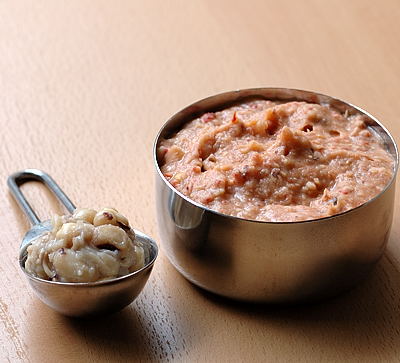
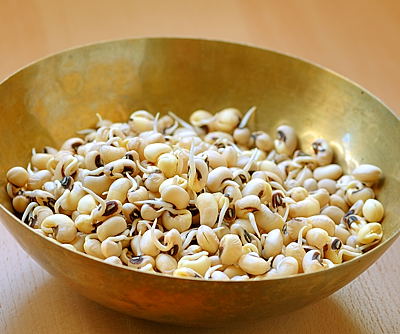
I had an another recipe in mind with black-eyed bean sprouts for today’s meal. But I accidentally over-cooked the beans to mush. Thus born the bean dip for rotis.

The beautiful pale red color of the dip is from chipotle chillies. I really love how the spicy chipotle perk up a recipe with smoky flavor. I have also added fragrant cumin and lively lime juice to the pureed beans. The dip may be a last minute solution to the mushed bean problem, but the result was attractive and had a great taste, similar to refried beans that they serve in Mexican restaurants.


Overcooked Black-Eyed Bean Sprouts and Black-Eyed Bean Dip

Recipe:

Precooked black-eyed bean sprouts or beans - 1 cup
Dried chipotle chillies - 2 (presoaked in warm water for about 30min)
cumin - half teaspoon
salt - half teaspoon or to taste
Lime juice -2 tablespoons or to taste

Take the chipotle chillies and cumin in a Sumeet style mixer or food processor. Pulse few minutes until the chillies are very smooth. Add the black-eyed bean sprouts, salt and lime juice. Process to fine puree. Remove to a cup and refrigerate for about 30 minutes to let the flavor develop. Serve with roti/tortillas or corn/taro root chips.

Previous Page » 
 

Click here to visit VedaBooks.com Veda Books.com

Click here to enter Haldiram's Store Haldiram's Store

Click here to visit and learn from Chef and Cookbook Author Harinayak Click here to visit Harinayak.com Harinayak.com

Click to Visit Awesome Cuisine Website Awesome Cuisine

Click here to enter Indus Ladies forum Indus Ladies.com

click here to visit Supreme Spice Online Store About Supreme Spice

India Cookery, Food Stock Photography: Click to Browse, Digital Download and Print the Food Photographs Food Stock Photography

Mahanandi Selections: Shop at Amazon.com to Support Mahanandi Browse Amazon.Com

Amazon... Paypal...