Mahanandi

Cooking with Consciousness ~ Indi(r)a’s Recipe and Photo Journal

Vadapappu (వడపప్పు)

Vadapappu
Ethereal Vadapappu

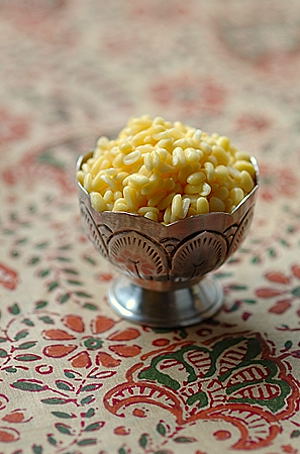
With only one ingredient, this has to be the easiest neivedyam one could prepare on a festival day. A Sri Rama Navami original classic, rehydrated yellow moong dal is a delight and goes by a special name Vadapappu.

The surprising good taste comes from the simplicity of the preparation. No cooking involved. No spices, no oil and not even salt or sugar. Just soak the moong dal in water overnight. Half cup would be enough for two people. Drain. Rinse once, and consume. The taste will be extra good when prepared with split moong dal. Follow the same principle. Soak overnight, rinse the dal in several changes of water to remove the green coverings. Like mini yellow roses peeking from a rose bush, the revealed moong dal in pale yellow color will take the breath away with simple beauty.

Vadapappu may look innocent and inconspicuous but it’s a protein powerhouse, easily digestible, and nourishing to human body.

Claypot Cooking: Poha Payasam with Almond Milk

అటుకుల పాయసము

Claypot
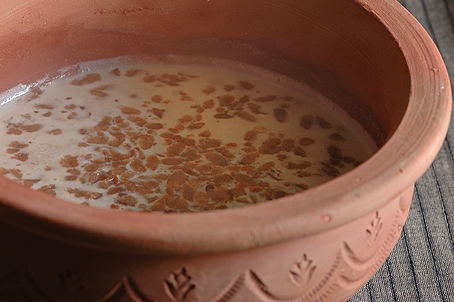
Claypot Cooking: Poha Payasam with Almond Milk

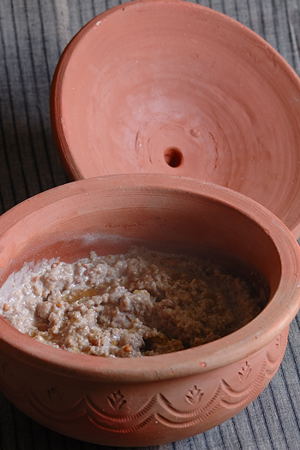
I had been looking for a decent clay pot for cooking for a long time. Last weekend, I have come across one at a local grocery shop called Apna Bazar. The clay pot is from India, very well crafted and decorated with pretty floral design. The size is good and it also has a well-fitted lid. Price $12.

I brought the clay pot home, prepped it by soaking in water and then simmering the water for few times, half an hour each time. Simmering was done on stovetop following the clay-pot cooking principles. First warm the pot on low heat and then gradually increase the heat to medium level. I never tried high heat setting fearing that it might crack. Although it was on electric stovetop, this method has worked very well. Like the iron box on steam setting, the clay pot hissed every time, but absorbed this newbie trails kindly. I felt confident enough to try out the real deal and did the opening ceremony with payasam preparation yesterday. The sweetness that comes with clay pot cooking, combined with sweetness of the payasam, it was a good experience.

The following poha payasam with almond milk is very easy to make. And I think, it has a taste that delights most everyone. If you prefer, semiya or sabudana can be substituted for poha.


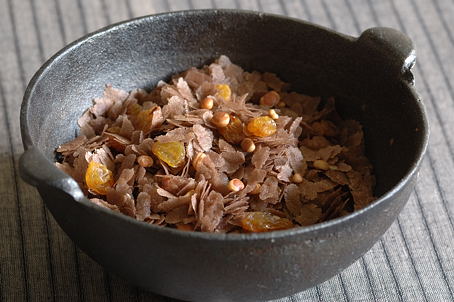
Toasted Poha, Golden Raisins and Chironji Nuts

Recipe:
(for two to four people, for one meal)

3 cups almond milk (badam paalu)
½ cup maple syrup (or sugar to taste)

1-tablespoon ghee
2- tablespoons golden raisins
1-tablespoon chironji (Saarapappu or charoli)
1-cup poha (atukulu, rice flakes)
1 teaspoon freshly crushed cardamom

1. Place almond milk in a wide pot on stovetop. Add maple syrup. Slowly, on medium-low heat, simmer for about 20 minutes, until three cups have reduced to about two and half cups.

2. While almond milk is simmering, in a small kadai or wok, take ghee. On medium heat, warm the ghee. Add golden raisins and saute, constantly stirring. Wait until they puff up like round balloons. It’s a beautiful sight and worth the wait. With a slotted spoon, remove the balloons to a plate.
Add chironji nuts to the kadai. Toast them to pale red. Take them out and add poha. Toast for couple of minutes just until they are warm to touch. Together, they will look like shown in the photo above.

3. Add the toasted poha, golden balloons and chironji nuts to simmering almond milk. Sprinkle the crushed cardamom. Mix. Turn off the heat immediately. Cover the pot and let the poha absorb the almond milk. Poha is like cereal flakes, softens quickly.

Serve hot or at room temperature. Just before serving, drizzle a tablespoon of maple syrup. This poha paysam with almond milk is as nutritious as it is tasty and makes a comforting dessert for people who fear the hormonal effects of regular milk and soymilk.

Claypot
Claypot Cooking: Poha (Atukula) Payasam with Almond Milk

*****
Slow connection, server problems. Sorry for the inconvenience.
*****

Flavors of Life ~ Candy Clouds


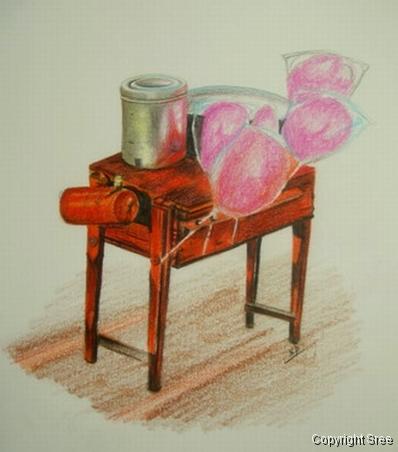
Flavors of Life ~ Candy Clouds
Painting by Sree (Colored Pencils on Paper, 5″x6″)

The heavenly feel of cotton candy melting in the mouth on a happy, fun-filled holiday cannot be matched by any other gastronomic delight. I have dreamt of these. Yes, I dream of food very frequently.:) I must add that these not only make my taste buds feel wonderful, I get a warm, tingly and happy feeling in my heart too. Oooooh, that’s enough mush. :) I wonder what it is about us girls and candy and pink!

~ Sree

Previously on Flavors of Life:

Banana Vendor by Sree Pumpkin Blossom by Sree Tirupathi Laddus by Sree

Semiya Payasam

Photo Purchase Keyword: Semiya, Payasam
(Please don’t photosteal. Make a photo purchase to digital download and to print.)

From hearing the Purandaradasa’s spiritual keerthana “Rama nama payasakke“, we will know that the semiya payasam we prepare at home has at least 500+ years of history. The recipe ingredients and the method have remained unchanged all these years. That is the greatness and as well as the simplicity of this recipe. What has changed is our attitude and regard towards such honest and soulful food. But that is a topic for another time. For now, continuing the 500 plus year old tradition, here is how I prepared the semiya payasam at my home for Neivedyam.


Semiya, Sugar, Ghee, Milk, Cashews and Draksha ~ Ingredients for Payasam

Recipe:

4 cups whole milk
½ cup cane sugar, ( or to taste)
Fine semiya, one bunch, about the size that fits baby’s fist (10″ long)
2 tablespoon of ghee, melted
16 cashews and 16 golden raisins
4 cardamom pods, seeds powdered

Heat ghee in a wide pot. Add and toast golden raisins to pink balloons first, and then cashews to pale gold color. Remove them in to a plate.

In the same pot, add and toast the semiya for one to two minutes. (This is to remove the raw wheat smell of semiya and I usually do it, but this is optional.) Take the toasted semiya to a plate and keep aside.

In the same pot, add the milk and stir in sugar. Bring the milk to a rolling boil. Reduce the heat and add the semiya. Also the cashews, golden raisins and cardamom powder. Simmer on slow heat for ten minutes. The fine semiya floats like water lily stems in a pond of sweetened milk. That is the consistency we want in semiya payasam.

Serve warm or cold, and enjoy this fine, honest dessert in the name of tradition.


A Sweet 500+ year old tradition ~ Semiya Payasam

Note:
Semiya, the fine wheat noodles are a speciality of India. They are prepared with durum wheat flour and water. Semiya is egg free, and that is the major difference between western egg-laden vermicelli and Indian semiya. (Semiya is available at Indian grocery shops).

*************

A special Recipe for the Ultimate Bliss ~ Semiya Payasam

Bhukthi means nourishment. While nutritious food is needed to sustain us for everyday activities and the maintenance of this physical body, a different kind of Bhukthi is necessary to satisfy our cravings to realize the true happiness in ourselves. Constant indulgence in the name of God (Bhakthi) provides the nourishment to realize the bliss of boundless divinity in the ego-limited humans.

This relation between Bhakthi and Bhukthi thus goes deep and this concept is brought to the people in beautiful poetry and song by many saint musicians of India.

Saint Purandara Dasa, the father of Carnatic music has created song and music the way to achieve the happiness which we all seek. He has composed innumerable songs called keerthana’s, full of wisdom and devotion eternalized in the hearts of people. His message of morals is handed out in easily understandable form, woven together with stories from the epics, along with beautiful expressions and analogies. No wonder his songs have pleased, inspired and guided people since more than four hundred years.
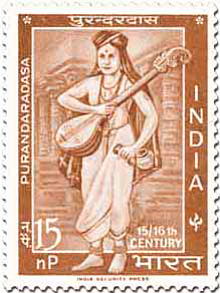
Stamp Commemorating Sri Purandara Dasa

God is the source for infinite happiness and he has infinite names, infinite forms and is ubiquitous. For Purandara Dasa, God is Purandara Vittala in whose form he saw all other manifestations or avatars of God like Rama, Krishna, Shiva and Hanuma.

The spiritual song “Rama nama payasakke” is quite popular and sung by many in their own versions. It was written in the beautiful south Indian language of Kannada which is said to be as enchanting as the fragrance of kasturi. Saint Purandara Dasa elicits the great bliss in chanting the name of the God Vittala in “Rama Nama Payasakke“.

The keerthana explains with an easy analogy on how to obtain the spiritual bliss or Ananda with a recipe to make payasam.

The keerthana goes like this:

Pallavi: rAma nAma pAyasakke krSNa nAma sakkare viTTala nAma tuppava kalasi bAya capparisiro
Charana1: ommAna gOdiya tandu vairAgya kallali bIsi summane sajjige tegadu kammana shAvige hosedu
Charana2: hrdayavembo maDikeyalli bhAvavembo esaraniTTu buddhiyinda pAka mADi harivANake baDisikoNDu
Charana3: Ananda Anandavembo tEgu bandidu kaNIrO Ananda mUruti namma purandara viTTalana neneyiro

Purandara Dasa sings, “O people, indulge in the lip-smacking-good payasam called Rama nama, which is made sweet with the sugar called Krishna nama and is richly folded with the ghee called Vittala nama”.

Then he describes the meticulous details needed to make this special payasam from the scratch.

First obtain wheat flour of honor. Grind it in the mill of detachment. Make the dough called simplicity and draw thin semiya noodles from it.

In the pot called your heart, boil the noodles with the milk of feelings. Cook it then with the wisdom of worship.

Add the sweetness of Krishna’s name as sugar, and the nourishing richness of Vittala’s name as the ghee and lo you have your lip-smacking-delicious payasam.

Purandara Dasa even describes the proper method to enjoy the delicious payasam. He beckons us to serve it on a large platter and enjoy it. When burps emanate out of fulfillment, he asks us to remember the name of God Vittala who is the embodiment of immeasurable happiness and ecstasy.

Through this keerthana, purandara dasa gave us a recipe to live an ideal life. To live our life with honor, come through the grinds of materialistic attachments with austerity, and obtain the raw material for happiness using the simple method of devotion. Allow the feelings of joy and love boil in our heart wisely, and celebrate every moment of our life bit by bit contemplating God’s grace with gratitude. That is the ultimate sweet bliss!

Makara Sankranthi Shubhakankshalu!
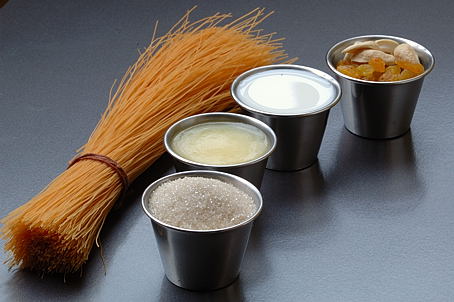

Semiya, Sugar, Ghee, Milk, Cashews and Draksha ~ Ingredients for Payasam
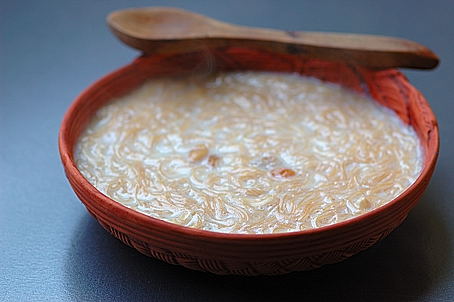

Rakthi Raga for Bhukthi ~ Semiya Payasam

Article Contributed by Madhuri Akkenepalli (Friend of Mahanandi)
Photos by Indira Singari
Previously on Rakthi Raga for Bhukthi:
Of Being and Becoming ~ Ragi Idlies by Janani Srinivasan

Links:
Saint Purandara Dasa on Wiki.
Audio Links to “Rama Nama Payasakke”:
by Sreemathi Sudha Raghunathan and Vijayalakshmi Subrahmaniam
Sugar Figurines for Sankranthi

Chakkara Achchulu (Sugar Art of India)

Chakkara Achchulu of India
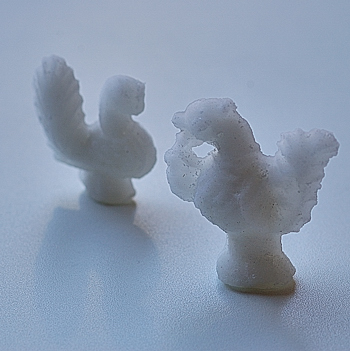
Mother and Baby Pheasants in Early Morning Mist
(Panchadaara Chilakalu)

Sugar Art of India
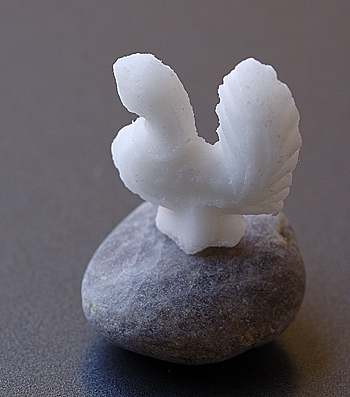
Baby Peacock Exploring the Countryside

Sugar Figurines of India
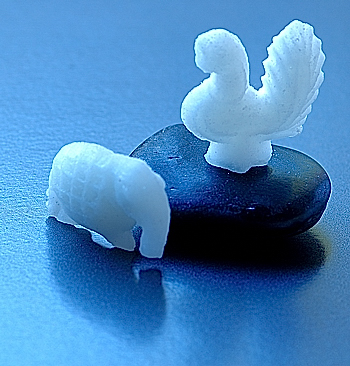
Baby Peacock and Baby Elephant at a Water Pool

The beautiful sugar figurines of India are prepared for Sankranthi and during Dasera-Deepavali festival season. They are Pooja ornaments, and also sweeten the saare (gifts) in functions like marriages and baby-shower etc. These delightful, melt in mouth treats are prepared by pouring the pure and concentrated sugar syrup into carved wooden molds. Little bit of care and patience, viola, the tiny decorative candy items are ready to enjoy.

The sugar figurines photographed here came all the way from India… survived the tiresome travel conditions halfway across the globe. Thank you dear Janani for sending these delectable delicate delights for us.

Sugar Figurines that Holds Sweet Memories ~ Photo Essay
Sugar-Khoya Figurines for Rukhwat

Indira

*********

Banana Biscuits (Mangalore Buns)

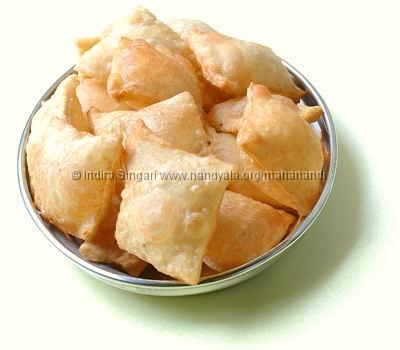
These habit-forming sweet banana biscuits are easy to like. I surely can say that judging from the speed at which they get gobbled up every time I make them.

The recipe is based on traditional Mangalore buns. Honeyed fragrance and creamy sweetness of banana could be felt and tasted, but it would not over-power the taste buds. A good and fun snack.


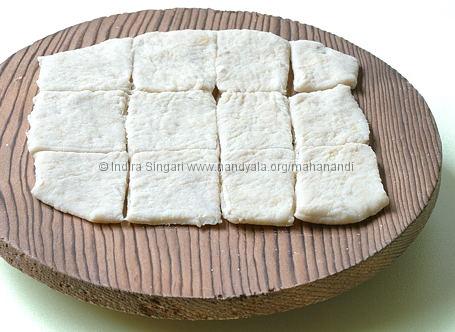
Banana Biscuit Dough Rolled and Cut to Squares

Recipe:
(for 20 to 25 small biscuits)

1 cup maida (or all-purpose flour)
1 ripe banana
2 tablespoons sugar
1 tablespoon melted ghee
¼ teaspoon cardamom powder
Peanut oil to deep-fry

Blend or mash banana and sugar to smooth consistency. Add to flour.
Stir in cardamom and ghee. Mix to prepare tight dough. Rest for an hour.
Divide the dough to lemon sized rounds and roll out each round to a thin circle.
Cut to squares like shown in the image and deep-fry to gold.

Regular chapati style pressing yields soft and chewy biscuits. For crispy and crunchy biscuits, press out the dough to thin.

If you’d like to take it up a notch, dip the fried biscuits in sugar syrup like we do in jilebi or roll them in sugar like beignets.


Banana Biscuits ~ for JFI:Bananas, Hosted by Mandira of Ahaar

Kalakand


On Krishnatashtami, we celebrate the Bhagavan Krishna’s birthday. The scriptures portray bala (baby) Krishna as a happy and mischievous child with boundless energy and great fondness for all things milk. Milk, yogurt, buttermilk, cream, ghee, venna, and milk based sweets are lovingly offered to bala Krishna during this festival time. In our family, for pooja neivedyam we prepare venna (the cream layer from yogurt) and pala kova or kalakand.
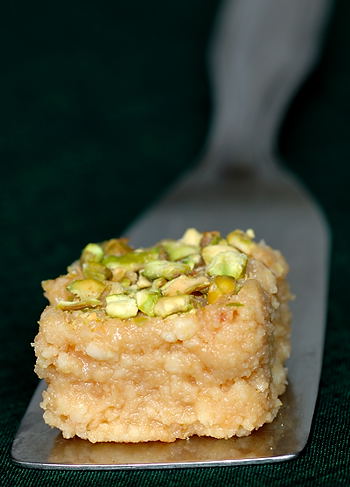
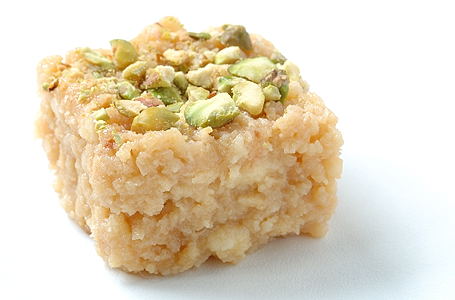
Kalakand, an exquisite, milk based sweet preparation is an interesting process. Concentrated milk called khoya and fresh paneer called chhana are mixed and simmered together with sugar to a luxurious thick, firmness. The mixture is cooled, then cut to squares and garnished with pistachios. That is kalakand. As you can imagine the kalakand has a rich taste.

Depending on the khoya-chhana ratio and sugar variety, kalakand is 2 types.
Milky-white kalakand: Three parts chhana and one part khoya together simmered slowly with white sugar for hours. Continuous stirring and low heat cooking result in a pure-white kalakand. It’s a labor intensive process and usually you will find this milky-white kalakand at Indian sweet shops.
Coral-pink kalakand. Chhana and Khoya are in 1:1 or 1:3 ratio and unprocessed, old-world style red sugar (turbinado) sweetens and colors the kalakand. This is the type we prepare at our home. Both varieties taste equally delicious, but I prefer the Coral-pink colored kalakand. Here is how I made it for Krishnashtami prasadam.

Recipe:
(takes about 2-3 hours. Makes about 18 to 20 2×2x1 square shaped Kalakand)

½ gallon whole milk and juice from one lime - to prepare chhana
½ gallon whole milk - to prepare Khoya (concentrated milk)
2 to 2½ cups - unprocessed cane sugar (turbinado)
1 cup, shelled and unsalted pistachios - coarsely crushed for garnish
Silver or gold foil to decorate the kalakand

2 big, sturdy, wide based pots -


Chhana for Kalakand

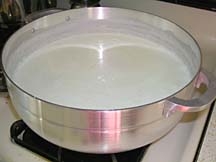
1: Place the pots on stove-top and add half gallon milk to each pot to prepare chhana and khoya simultaneously.

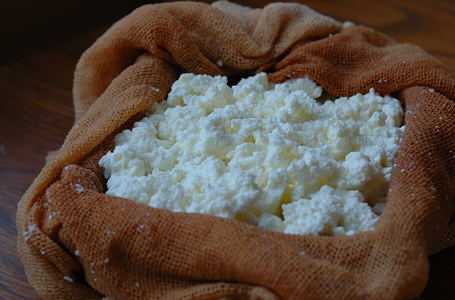
Chhana: In one pot, once the milk starts to boil, reduce the heat. Add the limejuice and stir. Within minutes, you will see small clouds like white curds floating on top. Wait till they get bigger (if they don’t, add some more lime juice and stir) and the whey below gets less milky. This process takes few minutes, so wait at least five minutes. Switch off the heat and let it stand for few more minutes. Then pour the whole thing immediately into a clean muslin or cheese-cloth in a colander, over a sink. Gather the curds and discard the whey. The fresh paneer called chhana is ready.

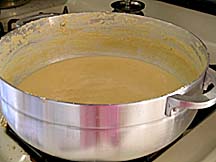
Milk simmering thickened milk after 1 hour on the stove
Simmering Milk ………….. Thickened milk (khoya) after 2 Simmering Hours

Khoya: In another pot, once the milk starts to boil and lower to heat and simmer, until the milk gets thick and is reduced to about one fourths of the original quantity. (While thickening, stir now and then, and care should be taken that milk does not stick to the bottom of the pot.)

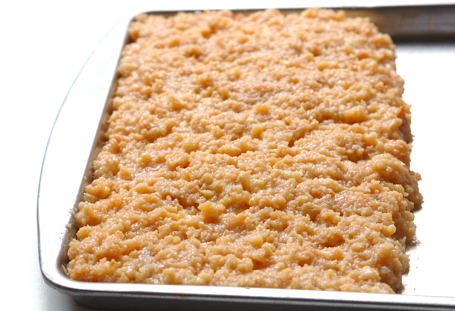
2: At this stage, to the khoya, add the freshly prepared chhana and sugar. On low heat, simmer continuously mixing, until the khoya-chhana mixture thickens to a waterless-firm lump. This process takes about 45 minutes to one hour.

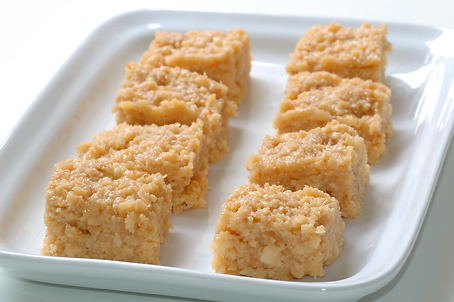
3: Pour the firm mixture onto a plate. Level it evenly and allow it to cool completely. Then cut to squares or diamonds and garnish with gold/silver foil and pistachios.


Kalakand Cooling


Kalakand Cut to Squares

Kalakand
Kalakand Garnished with Pistachios ~ for Indian Sweets 101

Previous Page »