Regional Rustic Recipes
by Manipal Mahila Samaj
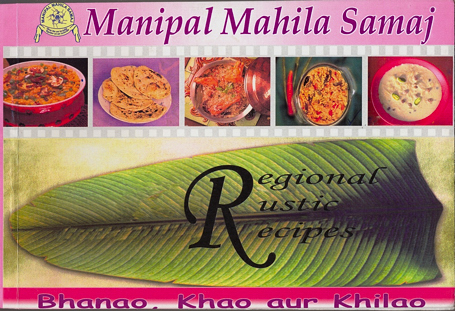 Published in 2007 by Manipal Mahila Samaj at Manipal, in Karnataka, India.
The cooking of our mothers and grandmothers is the bedrock of our gastronomical worlds. It feeds our memories and inspires our culinary efforts, particularly if we are separated from it by distance or, more unfortunately, death. “Just like Amma makes” is the gold standard to which most of us aspire. It is understandable, therefore, that we have forgetten a time when easy and daily access had rendered us somewhat blase about the traditional foods they prepared. We were tired of the idli breakfasts, the pumpkin koddel was boring, the maggey with jackfruit seeds was fodder for the resident comedian at family gatherings, and why, why, did we have to eat moong daal paayas on every festive occasion! What excited our palates and fired our appetites in those days were the dishes sent over by the neighboring aunties: we waited eagerly for the biryani from Salma downstairs, the fudge, marzipan, and cakes sent over by Mrs. De Souza, the sambar from Mrs. Ananthraman, the bisi bele bhaath from Mrs. Rao, the kori-rotti from Mrs. Shetty and the khakra–chunda from Mrs. Parekh. Even dishes from their failed experiments were sometimes more welcome than the daily food prepared at home. Eating out at restaurants was a luxury and street food, a surreptitious pleasure from leftover pocket money in those days, so the only way to sate our hunger for something different was the gifts from neighboring kitchens.
I was reminded of those times when I received the Manipal Mahila Samaj’s cookbook, Regional Rustic Recipes, through the good graces of a friend and old-time resident of Manipal. The Manipal Mahila Samaj publishes an annual magazine for its members; last year, they decided to compile a special issue with recipes contributed by the members. The result is a charming little cookbook with all the strengths and foibles of a homegrown production created in the spirit of community and sharing. It is a ticket to the kitchens of the neighborhood ladies of my days in India.
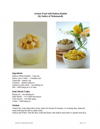
 Back cover
The distinguishing feature of this book is the classification of recipes. Most general cookbooks, Indian or otherwise, are organized along the type or timing of the meal – breakfast, snacks, main dishes, sweets, preserves – or ingredients – rice, grains, vegetables, meat, and spices. Regional Rustic Recipes is primarily organized according to the diverse regional, religious, and linguistic backgrounds of its members. There are other cookbooks, of course, which provide recipes according to the geographical states of India. None of them, however, reflects the challenges inherent in categorizing Indian cuisines into neat boxes demarcated by simple lines of geography, religion, language, or sub-community. Thus, the book’s main chapters are organized by:
– Geography: Andhra Pradesh, Kerala, Rajasthan, Lucknow;
– Geography and language: Punjabi, Tamilian, Sindhi;
– Religion: Muslims;
– Religion and geography: Mangalore Catholics;
– Community: Goud Saraswat Brahmin; Bunt, Billava, Ganiga and Mogaveera; and
– Religious proscriptions: no onions and garlic.
Within the chapter on Goud Saraswat Brahmins, the recipes are Kerala-style, Maharashtrian, North Kanara, and South Kanara (Udupi-Mangaloreans); and within No Onions & Garlic, there are the Gujaratis, North Indian Jains, South Indian Jains, Kannadiga Brahmins and UPites (Uttar Pradesh)! Kannadigas and Gowdas sit in their own chapter, and perhaps as a nod to the mother state, there is an entire chapter on Karnataka rice items.
The recipes themselves are another strength of the book. They are tried-and-tested, authentic, and do not shy away from using exotic ingredients or difficult procedures. Make no mistake, this is a recipe exchange between cooks who have wielded the ladle for decades. Consequently, this is not a book that is intended for beginner cooks or those inexperienced in regional Indian foods. The text and layout are minimalist, and there are no photographs or sketches inside the book. Neither the contributors of the recipes nor the editors are named; I was told that this was a conscious choice because for many of the recipes, there was no way to attribute the source in an unambiguous manner. The style of writing is reminiscent of handwritten recipes with their terse instructions and use of truncated and abbreviated words such as ing, tsp, min, and pwd. Further, the errors (dagad phool and marathi moggu are said to be the same spice) do not irritate me as much as the banalities (Food is very important in Sindhi culture).
For all its minor flaws, the book is a welcome addition to the seemingly bare landscape of not-for-profit cookbooks in India. By not-for-profit, I am referring to books published by local temples or churches, community organizations, and women’s associations or other groups, with the express purpose of raising money for a social cause or spreading awareness about a particular type of diet or cuisine. I cannot explain my fascination for such cookbooks – perhaps it is the community effort, the sincerity of purpose, or the local flavours that are sprinkled in these works. Over the last year, I have managed to collect some such books by scouring used bookstores and old paper marts in India. The pickings, however, have been slim compared to the volumes of such (non-Indian) publications seen at used-book sales and stores in the United States. Granted that these types of books are typically published in single editions on a small scale with limited distribution; hence, they go out of circulation very quickly. Perhaps the U.S. systems just do a better job of retrieving old copies of such books. It is probably not a stretch, though, to say that there is room for much more activity and many more books in this sphere in India.
Recipe: Marsoppu
Adapted from Manipal Mahila Samaj’s Regional Rustic Recipes, Chapter: Kannadigas and Gowdas
Ingredients:
Green chillies – 4 to 5
Garlic – 5 to 6 cloves
Onion – 1
Tomatoes – 2
Water – ½ cup
Mixed Greens – 1 cup
Toor daal – ½ cup
Fresh grated coconut – ½ cup
Salt to taste
For Seasoning:
Oil – 1 teaspoon
Mustard seeds – ½ teaspoon
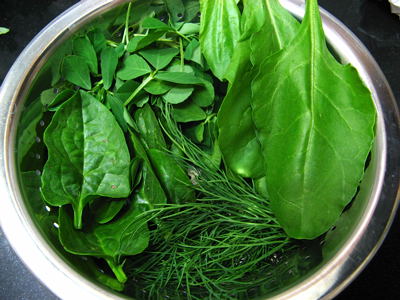
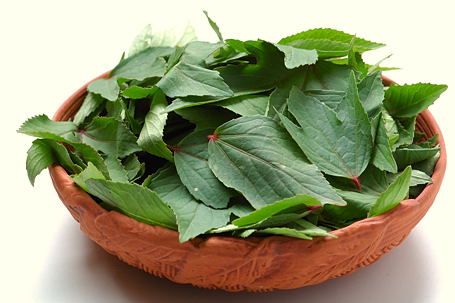
Mixed greens: Fenugreek (methi), spinach, dill (shepu), Malabar or Indian red spinach (basaLe)
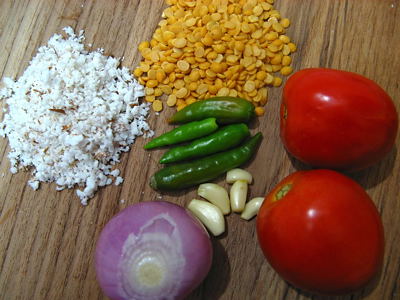
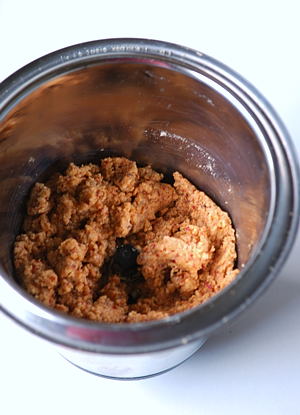
Clockwise from 12 o’clock: toor daal, tomatoes, garlic, onions, coconut. Centre: green chillies
Method:
Cook the toor daal and set aside. Roughly chop the green chillies, garlic, onions, and tomatoes. Place in a saucepan or any other cooking vessel along with a half cup of water. Cook until the vegetables are soft (about 5-10 minutes) and remove from heat. Remove the cooked vegetables with a slotted spoon, leaving the liquid in the saucepan. Once the vegetables are cool, add the coconut and grind to a paste. Add the roughly-chopped greens to the reserved liquid, and cook the greens until wilted. Cool them and run them through a mixie just once. Mix the cooked daal, the coconut-vegetable paste, and the roughly ground greens in the same saucepan, add salt, and bring it to a boil. Remove from heat. Do the tempering as usual: heat the oil, add the mustard seeds and let them splutter. Add this mixture to the daal-greens mix.
Notes:
I modified the original recipe by reducing all ingredients, except the greens, by half. While I have encountered several recipes with daal, greens, and vegetables, I like the separate cooking processes adopted here as it accounts for the differing cooking durations required for each ingredient. The complete absence of powdered spices also scored a few more points in my book. The original recipe made no mention of salt, which is probably an oversight.
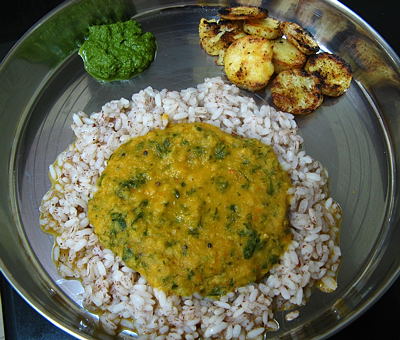
Marsoppu served with red rice, wild tuber chips, and radish-greens chutney
Text and Photographs: Veena Parrikar
Previously in the Cookery, Indic Series:
Introduction
Salads for All Occasions – Vijaya Hiremath
Cooking with Green Leafy Vegetables – Shyamala Kallianpur