Mahanandi

Cooking with Consciousness ~ Indi(r)a’s Recipe and Photo Journal

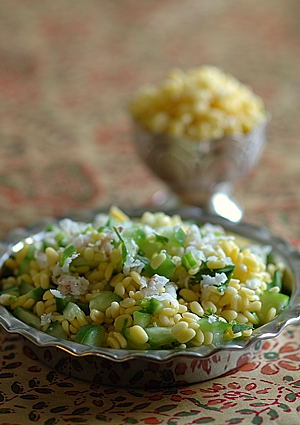
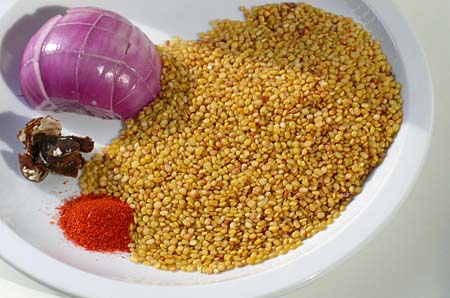
Vadapappu Kosambari

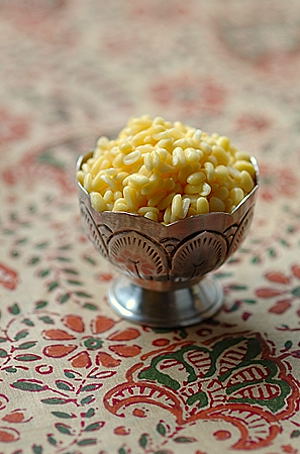
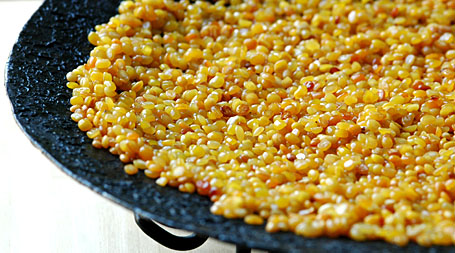
Vadapappu
Vadapappu Kosambari

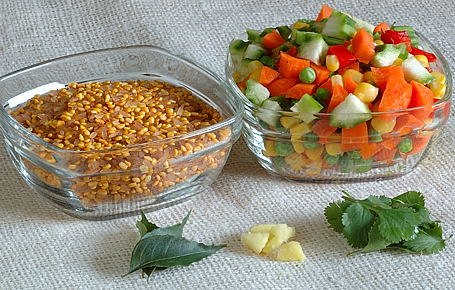
This kosambari with yellow moong dal (Vadapappu) is an ideal Upavaasa food. They would take a while to eat, giving the body a chance to register its satisfaction and that in turn would prevent hunger pangs and overeating. Completely raw, this traditional kosambari makes a decent, light meal for health and weight-conscious people.

Recipe:
(for two, for one meal)

Half cup yellow moong dal - Soaked in water for about 4 hours.
1 palm-length cucumber
1 green chilli, Indian or Thai variety
2 sprigs of fresh coriander
1 tablespoon - fresh coconut gratings
Pinch of salt, or to taste

Drain and rinse moong dal. Take them in a bowl.
Finely chop cucumber, chilli and coriander leaves. Add them to moong dal.
Sprinkle salt and coconut gratings.
I also added fresh juice from a small mandarin orange for the sweet note.
Combine and serve. Enjoy with a glass of buttermilk for a light meal.

Recipe Notes:
Traditional India - Vegan, Raw and Upavaasa Food
Diet-friendly and protein rich.
Upavaasa = Fasting

If anyone decides to make this Upavaasa food, I would love to hear how you like it taste/flavorwise.

Vadapappu (వడపప్పు)

Vadapappu
Ethereal Vadapappu

With only one ingredient, this has to be the easiest neivedyam one could prepare on a festival day. A Sri Rama Navami original classic, rehydrated yellow moong dal is a delight and goes by a special name Vadapappu.

The surprising good taste comes from the simplicity of the preparation. No cooking involved. No spices, no oil and not even salt or sugar. Just soak the moong dal in water overnight. Half cup would be enough for two people. Drain. Rinse once, and consume. The taste will be extra good when prepared with split moong dal. Follow the same principle. Soak overnight, rinse the dal in several changes of water to remove the green coverings. Like mini yellow roses peeking from a rose bush, the revealed moong dal in pale yellow color will take the breath away with simple beauty.

Vadapappu may look innocent and inconspicuous but it’s a protein powerhouse, easily digestible, and nourishing to human body.

Steam-Sauteed Spinach Moong Dal

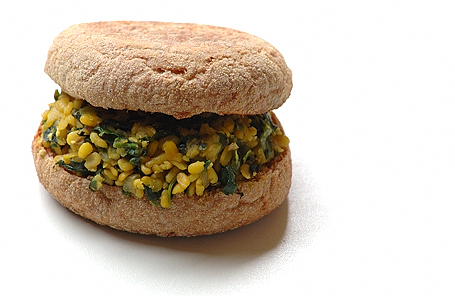
Spinach Moong Dal Sandwich

My very young and impressionable cousins in India, who read my food blog, are curious to know why I don’t cook with “cool” stuff like cheese. I like cheese, don’t get me wrong, but I rarely bring it home. Cheese is costly, caloric and full of saturated fat. It is a well known fact that foods like cheese with little or no fiber are number one cause for constipation and flatulence, and that kind of diet is also responsible for several ailments from heart attack to IBS to colon cancer. Cheese may look white and pure, but the color cover ups the harmful hormonal menace. The hormonal effects from estrogen, progesterone, bovine growth hormone, this is what cheese conceals, in addition to artery clogging saturated fat. It really takes time to understand how evil the cattle industry, the source of cheese, has become. Thanks to the ad blitz sorcery and the sold-out food writers’ cover-up of agro-globalization gallop, my cousins seem to know only the glitzy side of cheese-centric food. I try to explain to them all these things in a light-hearted manner. In a rush to englut the regurgitations, I am worried that they could become victims of early aortic regurgitation.

One way to prevent that from happening is packaging the traditional, nutritious food in a new way. This steam-sautéed spinach moong dal, a recipe I have learned from a Gujarathi friend, is usually served with rice or chapati. But I stuffed it between two toasted crumpets, squeezed some lime juice, and for saturated fat touch, grated some fresh coconut.

Carbohydrates from wheat, protein from moong dal, organic, hormone-free fat from coconut, green leafy goodness from spinach and natural digestion aid from spices.

This dal-wich actually tasted better than any one-dollar, mystery-cheese burgers out there. And, I am hoping that my cousins would take this homemade, all natural, cheese-free sandwich to the heart and consider it as “cool”.

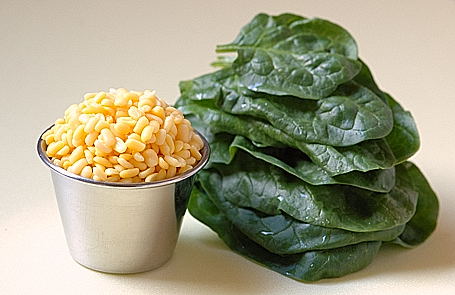
Moong Dal and Spinach
Yellow Moong Dal, Rehydrated and Fresh Spinach Leaves

Recipe:

Yellow moong Dal - Half cup (soaked in water for one hour, and drained)
Fresh Spinach - One bunch, finely chopped
Onion - one, finely chopped
Green chillies (Indian or Thai variety) - two, finely chopped
Turmeric - ¼ teaspoon
Salt - ¼ teaspoon
Cumin and mustard seeds - ¼ teaspoon each
Peanut oil - 1 teaspoon
Nutmeg and fresh coconut gratings - 1 teaspoon (optional)
Lime juice - one tablespoon, or to taste

Place a wide skillet on stove-top. Add and heat oil.
Add and toast cumin and mustard seeds.
When seeds start to pop, add the onions and chillies. Saute to brown.
Add the yellow moong dal. Sprinkle two tablespoons of water. Mix.
Cover with a lid and cook the dal to tender soft on medium-low heat.
Dal should be intact, but soft to bite. (Takes about 10-15 minutes.)
At that stage, add the turmeric, salt, nutmeg and coconut. Mix.
Add the spinach. Saute on high heat until the leaves collapse.
Sprinkle the lime juice. Serve hot with rice or chapati.

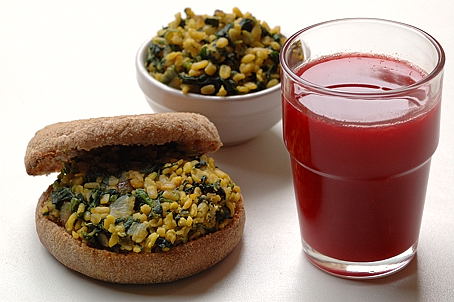
For our meal today, I toasted two english muffins (crumpets) to brown, and stuffed them with steam-sautéed spinach-moong dal. With a glass of chilled ruby orange juice on the side, it was a good meal.

Dal-wich
Spinach-Moong Dal Sandwich with a glass of Ruby Orange Juice
~ A Vindu for RCI: Gujarat at Mythili’s

~ Indira

Posted by Indira©Copyrighted in Spinach, Moong Dal (Washed) (Tuesday February 26, 2008 at 10:18 pm- permalink)
Comments (4)

Mamidi Pesara Pappu (Mango Moong Dal)

Photo Purchase Keywords: Mango, Moong Dal
(It takes money, time, effort and energy for food photography. Please don’t photosteal. Click on the links and purchase the photos legally to digital download and to print. Thanks.)

Lovely to look at, even lovelier to consume, mango-moong dal has a richness all its own without the need of too many ingredients. The unripe mango’s intense ruchi makes this dal just the side of heaven particularly if you happen to be a fan of khatti (tangy/sour) taste.

Yellow moong dal, Green mango, and regular seasoning - that’s all one need to prepare mango-moong dal. A long-standing family favorite, most commonly served to break the fast, this healthful treat is my contribution to talented Suganya’s Healthy Eats Event.

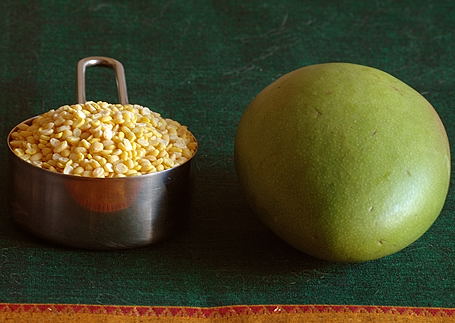
Yellow Moong Dal and Unripe Mango
Yellow Moong Dal and Unripe Mango (Pesara Pappu and Mamidi Kaya)

Recipe:
(for two, for one or two meals)

Half cup yellow moong dal
1 unripe mango - lightly peel the skin, discard the seed and cut the white part to half inch chunks. About a cup.
½ teaspoon chilli powder
4 cups of water

Take them all in a pot or pressure-cooker. Steam-cook until the dal reaches falling-apart stage. Then, with the back of the spoon, gently mash the dal to coarse consistency.

Now, infuse the dal with the ancient natural vitamins, also known as popu or tadka.

1 tablespoon peanut oil
2 sprigs curry leaves
4 garlic cloves, slivered
¼ teaspoon each - cumin and mustard seeds
Pinch - Hing (Asafoetida or Inguva)

Heat oil in a vessel until a curry leaf tossed in it sizzles. Lower the heat to medium. Add curry leaves and garlic. Toast to pale brown. Then add the cumin, mustard seeds and hing. When mustard seeds start to pop, add the cooked mango-moong dal. Stir in salt to taste. Mix. Serve warm. Great on its own and also with rice or roti for anytime of the day.

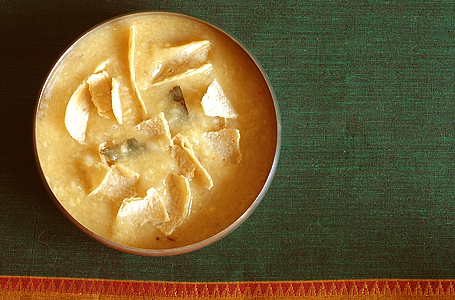
Mango Moong Dal (Mamidi Pesara Pappu)
Mamidi Pesara Pappu with Roti ~ Dedicating Our Meal to the Memory of Sreemathi Parigi Subhadra Krishna Rau. May She Rest in Peace!

I just learned the sad news that Pedatha has passed away. Pedatha was a sweet and kind person with gentle nature of yesteryears. I have never met her, but Pedatha has written a personal note in response to this interview. The affection in her words, I will always cherish that. She will always remain very much alive in the memories of those who loved, respected and treasured her.
My deepest condolences to the family!

~ Indira

Beerakaya~Pesara Pappu Kootu

Ridge gourd and Moong Dal :

I see the world around me. There is a deep tantric style worship of all-purpose flour and its endless avatars. All-purpose flour, butter, eggs and sugar: the central content is the same but by just changing the vessel and the decorations, several different avatars are possible. Like the prayers to the Gods, the all-purpose flour mantram resonates like this: cakes… yum, cookies… yum, cupcakes… yum, muffins… yum, bread… yum, biscotti… yum, pizzas, pies, scones… yum … yum … yum … the mantram goes on. The sugar bliss and the atma content follow… yum!

I am amazed by this boundless fascination all-purpose flour attracts. The Maya intensity of all-purpose flour is so great that each of its avatars is perceived as its own creation. I too use the flour mantram, but the avatars are limited to chapati… yum, puri… yum, paratha… yum. I’m just talking out loud.

Anyway, cakes and cookies could be divinely delicious, but vegetables are what inspire me to cook and write. Vegetables keep me happy in a world which is insanely flour-sugar coated. So here it is, another sane vegetable recipe from an all-purpose flour atheist. A hearty, dense, satisfying dal recipe with ridge gourd and moong dal, called Kootu.

Attempt this kootu recipe only when you have asafetida in your kitchen. Because the tiny amount of asafetida is what makes the recipe come alive. Onions and garlic are a big no but potatoes are a must. Ridge gourd, drumsticks and brinjal separately or together in combination are added to cooked, watery moong dal. And the whole thing gets simmered until a thick, honey like consistency is achieved. This is a good dal recipe for people who have low tolerance levels for onions and garlic, and also during early pregnancy times. Mild and soothing, this moong dal Kootu is a favorite for moong fans like me.


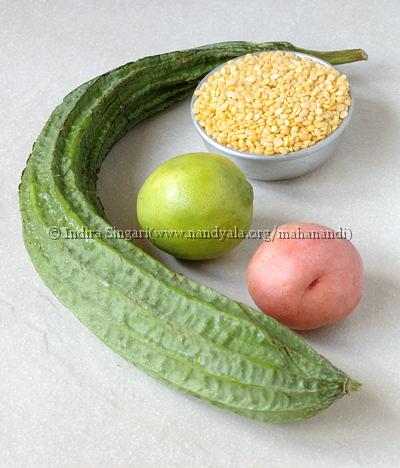
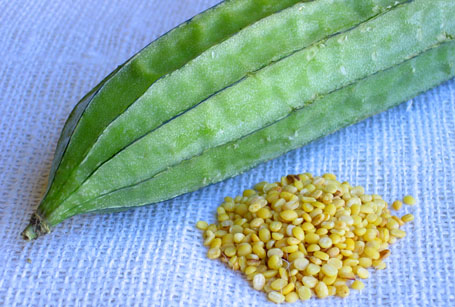
Ridge gourd, Red Potato, Lime and Yellow Moong Dal ~ Ingredients for Pesara pappu Kootu

Recipe:

Step 1: 1 cup yellow moong dal - Roast the yellow moong dal to pale red color in an iron skillet. Take the roasted dal in a pressure-cooker, add about 4 cups of water and pressure-cook to soft. Then, lightly mash the dal to smooth consistency.

Meanwhile blend six green chillies, two tablespoons of grated fresh coconut and a pinch of salt to smooth paste.

Step 2: In a saucepan - add a teaspoon of oil. Add and saute two cups of cubed potatoes first. Once the potatoes are half cooked, add 2 cups of finely chopped ridge gourd pieces and saute to tender. (3 potatoes and 1 ridge gourd.)

To the vegetables, add the mashed moong dal, green chilli-coconut paste, ½ tsp each -turmeric and salt, plus a quarter cup of lime/lemon juice, along with two cups of water. Mix, have a taste and adjust the spice, salt to your liking. Simmer for about 10 to 15 minutes.

Step 3: In the end, do the popu or tadka. Add and toast few curry leaves, dried red chilli pieces, cumin and mustard seeds and quarter teaspoon of asafetida in an iron skillet in a small amount of oil or ghee. Add the toasted contents to simmering dal. Mix and serve hot with chapatis. A state of bliss will surely follow.


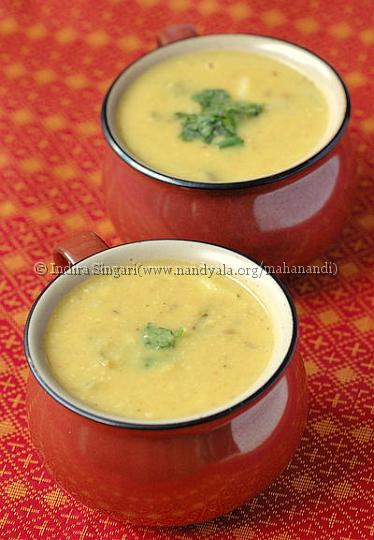
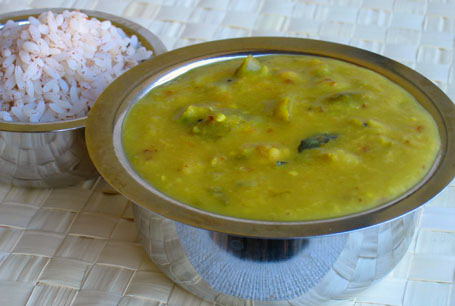
Beerakaya Pesara Pappu Kootu ~ for a Light Meal

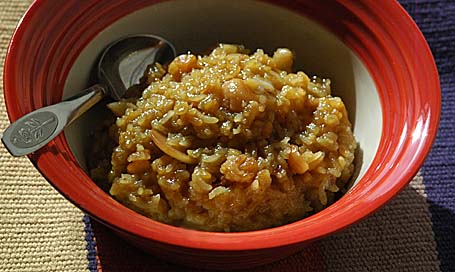
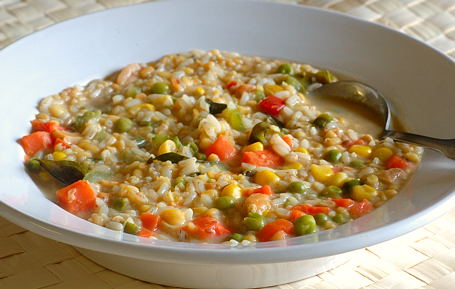
Pongal with Green Pearls

We, Indians could learn so much from Italians when it comes to food marketing, I think. Take for example, - they have risotto, we have pongal. There are thousands of articles, recipes written on risotto. Good, old fashioned risotto, risotto with saffron, risotto with that, risotto with this… the list goes on and on. It’s easy to apply the same thing to pongal. The basic recipe never changes but by adding fresh seasonal produce like fresh peas or asparagus etc, it’s possible to rekindle the interest in centuries-old pongal recipe. Of course we also need excellent writers, poets and photographers to create that harp effect, a swooning, spiritual experience at the mere utterance of “Pongal”. Few movie scenes where the hero adoringly feeds the heroine a spoonful of creamy pongal would also help.

We have golden recipes, excellent technique. What we lack is co-coordinated, full throttle marketing. Inspired tactics used with savvy and creativity could not only resurrect genuine interest plus prestige in the preservation and application of the food traditions, they would also benefit the farmers back in the country, in my view.

Here is my humble effort.


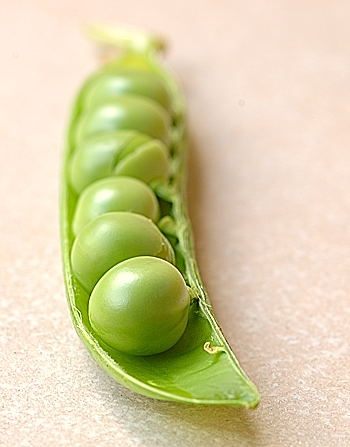
Green Pearls ~ Fresh Peas of Summer

Brimming with that glorious just-off-the vine sweet flavor, the fresh peas of summer make a succulent addition to the classic, creamy pongal recipe. Easy to prepare and full of flavor, pongal with fresh peas make a pleasing meal any time of the day.

Recipe:

1 tablespoon - ghee
1 teaspoon each - black peppercorn, cumin and cloves
8 fresh curry leaves
½ cup - yellow moong dal
1 cup - shelled fresh green peas
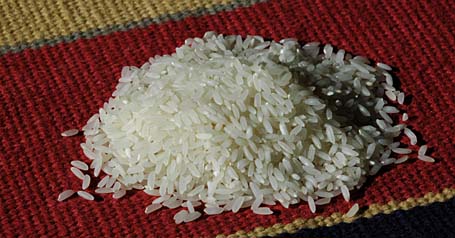
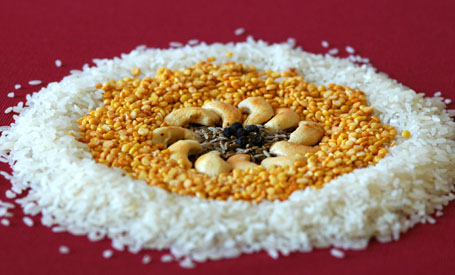
1 cup - Sona Masuri rice
6 cups - water
1 teaspoon - salt or to taste

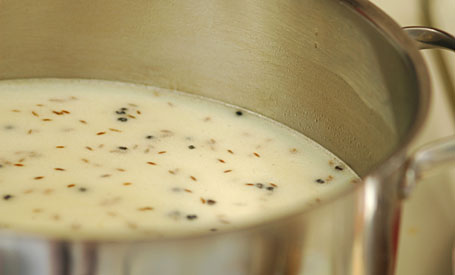
Melt ghee in a big saucepan on medium heat. Coarsely crush peppercorn, cumin and cloves in a mortar or in a spice mill and add to the ghee. Also add the curry leaves. Saute them gently for a minute or so.

Add the yellow moong dal. Continuously mixing, saute the dal to pale-pink color. At this stage add fresh green peas. Cook couple of minutes. Stir in Sona Masuri rice along with water and salt.

Bring the water to a boiling point on high heat. Once the water and rice start to dance, reduce the heat, cover the pot and simmer, mixing in-between until the rice is cooked to soft.

Turn off the heat, and add a last spoonful of water (or ghee, if you can afford it healthwise).

Leave to stand for 2-3 minutes then stir. Serve hot with chutney/kurma or yogurt.


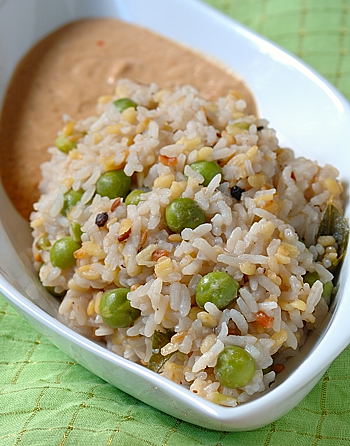
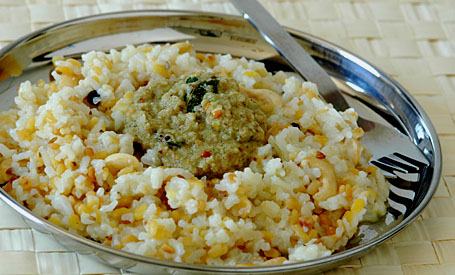
Heaven in a Plate:Pongal with Fresh Peas and Peanut Chutney ~ Weekend Supper

Recipe Notes:
All about Sona Masuri Rice - here
Pongal is good with chutneys, pickles, tomato based kurmas, coconut based curries and plain homemade yogurt.

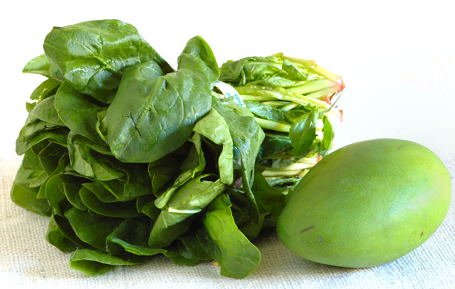
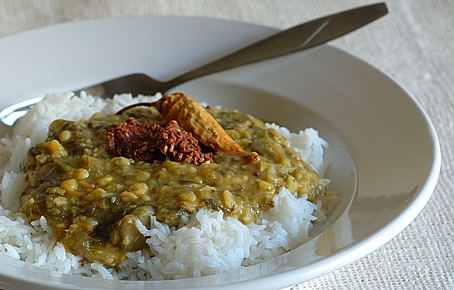
Palakura Pullakura (Spinach~Mango Dal)

I mentioned few times here on Mahanandi that I do not know much about the cuisine of Telangana, one of the three regional cuisines of Andhra. One reader picked up on that and mailed me her family recipes from Telangana region. It is surprising and very encouraging to see such passionate sharing of family heirlooms. Thanks Vijaya! Among her recipes, Palakura Pullakura with spinach and unripe mango caught my attention. This recipe is different from the preparations to which I am accustomed. No toor dal, but moong dal and chana dal used together. I have never heard of this combination before. I wanted to try this for JFI-WBB: Greens and made it for lunch.

To my delight, it came out exceptionally well. The combination of moong dal and chana dal worked. Who knew? The pleasant, mild taste of spinach balances and complements the sour and strong taste of raw mango. I can certainly give an A+ to this recipe. Long live Telangana cuisine, may it be part of Andhra Pradesh forever!

Spinach and Unripe Green Mango

Recipe:

Half cup each - moong dal and chana dal
One or about 1 cup - unripe mango pieces
One bunch spinach - washed and chopped
10 to 12 green chillies (small Indian variety) - finely chopped
¼ tsp turmeric
½ tsp salt

For popu or tadka:
1 tablespoon oil
¼ tsp each - chopped garlic, dried red chilli pieces, curry leaves, hing, cumin and mustard seeds

I roasted the moong dal first to light brown color, because I prefer the roasted taste to plain. Then took them in a pressure cooker. Added chana dal and washed the dals together once.

Next, I added the unripe mango pieces, spinach, green chillies and turmeric along with about 4 cups of water to pressure cooker. Covered and cooked for one whistle. The recipe instructions say do not cook more than one whistle, maintain chana dal integrity. So to do that, I turned off the heat after one whistle and waited for the valve pressure to get released. Once the valve pressure cleared, I opened the lid and added salt. Mixed and Mashed the dal lightly.

Time for the final step - popu or tadka. Heated the oil in a pan and toasted the popu ingredients listed above one after another in the order written. When mustard seeds start to jump around, I added the mashed dal to the popu and mixed everything thoroughly.

I also fried some papadams, sundried yogurt chillies and pumpkin vadiyams (courtesy of my blog neighbor Mythili of Vindu who returned from India trip recently.) to accompany the dal and rice. Served hot with rice and little bit of ghee, and a cup of yogurt on the side, our meal today was heartwarming and fulfilling. Thanks Vijaya for this family recipe and thanks Mythili for the tasty vadiyams. Here is to the power of sharing!


Palakura Pullakura with rice and ghee with a Side Snack of Sundried yogurt Chillies and Pumpkin Fritters

Previous Page » 
 

Click here to visit VedaBooks.com Veda Books.com

Click here to enter Haldiram's Store Haldiram's Store

Click here to visit and learn from Chef and Cookbook Author Harinayak Click here to visit Harinayak.com Harinayak.com

Click to Visit Awesome Cuisine Website Awesome Cuisine

Click here to enter Indus Ladies forum Indus Ladies.com

click here to visit Supreme Spice Online Store About Supreme Spice

India Cookery, Food Stock Photography: Click to Browse, Digital Download and Print the Food Photographs Food Stock Photography

Mahanandi Selections: Shop at Amazon.com to Support Mahanandi Browse Amazon.Com

Amazon... Paypal...