Mahanandi

Cooking with Consciousness ~ Indi(r)a’s Recipe and Photo Journal

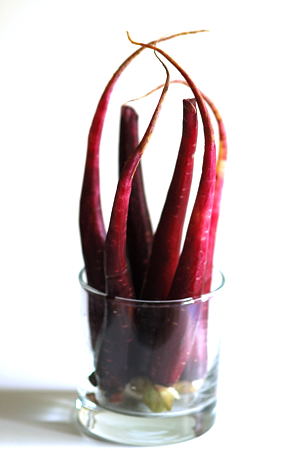
Maroon Carrots

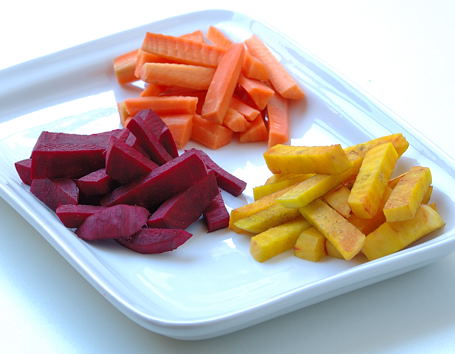
Peeled Maroon Carrots
Maroon Carrots (skins peeled)

Deep earthy maroon on the exterior and a brilliant red in the interior with an orangish-white center. Subdued sweetness, and lots of crunch.

That is how I would describe maroon carrots. In addition to looking unique, maroon carrots also have nutritional benefits - more beta-carotene than their orange counterparts, and they have antioxidants known as anthocyanins, according to Wise Geek.

This old-time variety is popular in north-Indian farmers markets and usually appears during winter and early spring seasons. They have also started to appear locally here in Seattle, thanks to the rejuvenated interest in all things ancient and natural. At Pike Place Market, they were priced at one dollar a bunch, and I bought one bunch. They still have roots attached, so I peeled the skin and cut with mandoline to thin rounds. They looked so pretty and fresh, within minutes half were gone. Crunch, crunch…

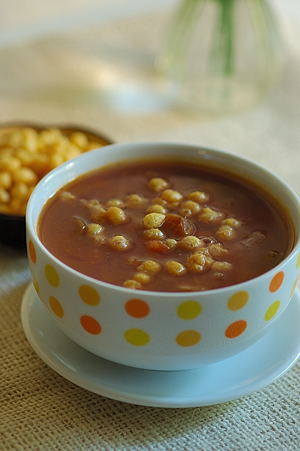
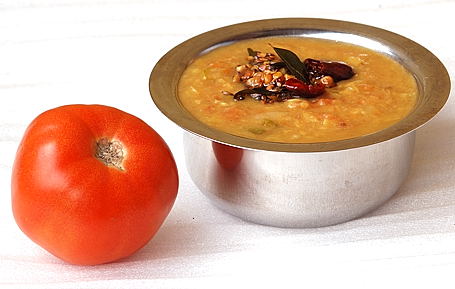
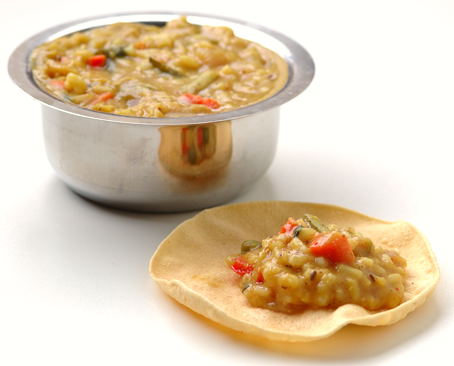
With the remaining half, I have prepared pappuchaaru for our meal today. Toor dal protein, maroon carrots and vine-ripe tomato, soured with tamarind, sweetened with jaggery and seasoned with hing tadka, the pappuchaaru had enough flavor to permit omission of rasam powder. Very mild, soothing to the stomach, chaaru tasted delicious.


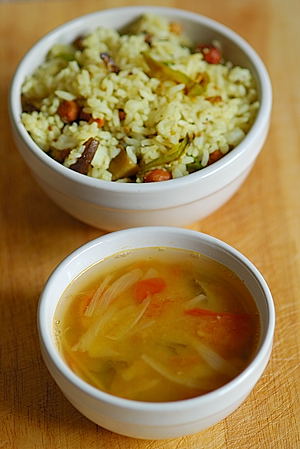
Pappuchaaru with Maroon Carrots, Garnished with Haldiram’s Boondi

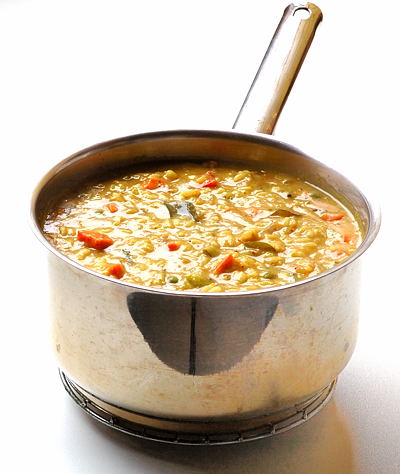
Pappuchaaru with Maroon Carrots:

Half cup - Toor dal (kandi pappu)
Half cup - Carrots, sliced to thin rounds
One - Ripe tomato, finely chopped
One - Onion, thinly sliced lengthwise
1 tablespoon each - tamarind pulp and crushed jaggery
½ teaspoon each - Turmeric and salt
¼ teaspoon - Red chilli powder

Hing tadka:
1 teaspoon - peanut oil
6 curry leaves
Pinch each- cumin and mustard seeds
1/8 teaspoon- hing (asafoetida/inguva)

Rinse toordal and take them in a pressure-cooker. Add about two cups of water. Cook to soft. With a wood masher, gently mash the dal to smooth consistency.

Once you are ready with the dal, start the chaaru preparation. In a vessel, heat peanut oil. Add and sauté curry leaves, cumin and mustard seeds to fragrance. Add hing and toast for couple of seconds. Add onion, tomato and carrot. Sauté for about five minutes. Add the cooked toor dal, also tamarind, jaggery, turmeric, salt and chilli powder. Add about a cup of water. Mix. Partially cover with a lid, and simmer for about 15 to 20 minutes to wonderful aroma. (The carrots bleed and color the preparation to reddish-brown, but not too much like beetroots.)

To serve, add a spoonful of cooked rice to a cup. Pour about three to four ladlefuls of pappuchaaru. Mix with a spoon or your right hand. For a tasty crunch, add a papad, few chips or boondi. Enjoy.

(NP: Carbohydrates from rice, quality protein from toor dal, vegetable goodness from carrot and tomato, spices like turmeric and hing for well being.)

***********

A question for you, dear readers

I am more likely to prepare this recipe, if it has

Soup in title, because I think of only Soups as healthy.
Chaaru in title, because I value traditional goodness and age-old wisdom.
Good nutritional profile (NP). I pay more attention to the ingredients list than titles.

***********

Cookery, Indic (3) ~ by Veena Parrikar


Regional Rustic Recipes
by Manipal Mahila Samaj
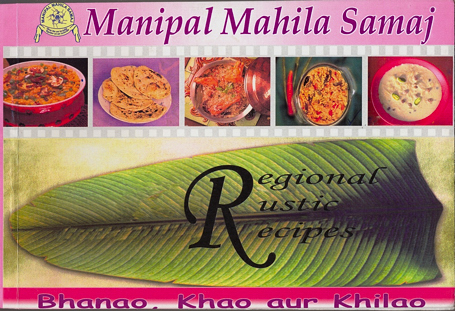
Published in 2007 by Manipal Mahila Samaj at Manipal, in Karnataka, India.

The cooking of our mothers and grandmothers is the bedrock of our gastronomical worlds. It feeds our memories and inspires our culinary efforts, particularly if we are separated from it by distance or, more unfortunately, death. “Just like Amma makes it” is the gold standard to which most of us aspire. It is understandable, therefore, that we have forgetten a time when easy and daily access had rendered us somewhat blasé about the traditional foods they prepared. We were tired of the idli breakfasts, the pumpkin koddel was boring, the maggey with jackfruit seeds was fodder for the resident comedian at family gatherings, and why, why, did we have to eat moong daal paayas on every festive occasion! What excited our palates and fired our appetites in those days were the dishes sent over by the neighboring “aunties”: we waited eagerly for the biryani from Salma downstairs, the fudge, marzipan, and cakes sent over by Mrs. D’Souza, the sambar from Mrs. Ananthraman, the bisi bele bhaath from Mrs. Rao, the kori-rotti from Mrs. Shetty and the khakra-chunda from Mrs. Parekh. Even dishes from their failed experiments were sometimes more welcome than the daily food prepared at home. Eating out at restaurants was a luxury and street food, a surreptitious pleasure from leftover pocket money in those days, so the only way to sate our hunger for something different was the gifts from neighboring kitchens.

I was reminded of those times when I received the Manipal Mahila Samaj’s cookbook, Regional Rustic Recipes, through the good graces of a friend and old-time resident of Manipal. The Manipal Mahila Samaj publishes an annual magazine for its members; last year, they decided to compile a special issue with recipes contributed by the members. The result is a charming little cookbook with all the strengths and foibles of a homegrown production created in the spirit of community and sharing. It is a ticket to the kitchens of the neighborhood ladies of my days in India.

Back cover

The distinguishing feature of this book is the classification of recipes. Most general cookbooks, Indian or otherwise, are organized along the type or timing of the meal - breakfast, snacks, main dishes, sweets, preserves - or ingredients - rice, grains, vegetables, meat, and spices. Regional Rustic Recipes is primarily organized according to the diverse regional, religious, and linguistic backgrounds of its members. There are other cookbooks, of course, which provide recipes according to the geographical states of India. None of them, however, reflects the challenges inherent in categorizing Indian cuisines into neat boxes demarcated by simple lines of geography, religion, language, or sub-community. Thus, the book’s main chapters are organized by:

• Geography: Andhra Pradesh, Kerala, Rajasthan, Lucknow;
• Geography and language: Punjabi, Tamilian, Sindhi;
• Religion: Muslims;
• Religion and geography: Mangalore Catholics;
• Community: Goud Saraswat Brahmin; Bunt, Billava, Ganiga and Mogaveera; and
• Religious proscriptions: no onions and garlic.

Within the chapter on Goud Saraswat Brahmins, the recipes are Kerala-style, Maharashtrian, North Kanara, and South Kanara (Udupi-Mangaloreans); and within No Onions & Garlic, there are the Gujaratis, North Indian Jains, South Indian Jains, Kannadiga Brahmins and “UPites” (Uttar Pradesh)! Kannadigas and Gowdas sit in their own chapter, and perhaps as a nod to the mother state, there is an entire chapter on Karnataka rice items.

The recipes themselves are another strength of the book. They are tried-and-tested, authentic, and do not shy away from using ‘exotic’ ingredients or difficult procedures. Make no mistake, this is a recipe exchange between cooks who have wielded the ladle for decades. Consequently, this is not a book that is intended for beginner cooks or those inexperienced in regional Indian foods. The text and layout are minimalist, and there are no photographs or sketches inside the book. Neither the contributors of the recipes nor the editors are named; I was told that this was a conscious choice because for many of the recipes, there was no way to attribute the source in an unambiguous manner. The style of writing is reminiscent of handwritten recipes with their terse instructions and use of truncated and abbreviated words such as ing, tsp, min, and pwd. Further, the errors (dagad phool and marathi moggu are said to be the same spice) do not irritate me as much as the banalities (“Food is very important in Sindhi culture”).

For all its minor flaws, the book is a welcome addition to the seemingly bare landscape of not-for-profit cookbooks in India. By not-for-profit, I am referring to books published by local temples or churches, community organizations, and women’s associations or other groups, with the express purpose of raising money for a social cause or spreading awareness about a particular type of diet or cuisine. I cannot explain my fascination for such cookbooks – perhaps it is the community effort, the sincerity of purpose, or the local flavours that are sprinkled in these works. Over the last year, I have managed to collect some such books by scouring used bookstores and “old paper marts” in India. The pickings, however, have been slim compared to the volumes of such (non-Indian) publications seen at used-book sales and stores in the United States. Granted that these types of books are typically published in single editions on a small scale with limited distribution; hence, they go out of circulation very quickly. Perhaps the U.S. systems just do a better job of retrieving old copies of such books. It is probably not a stretch, though, to say that there is room for much more activity and many more books in this sphere in India.

Recipe: Marsoppu

Adapted from Manipal Mahila Samaj’s Regional Rustic Recipes, Chapter: Kannadigas and Gowdas

Ingredients:
Green chillies - 4 to 5
Garlic - 5 to 6 cloves
Onion - 1
Tomatoes - 2
Water - ½ cup
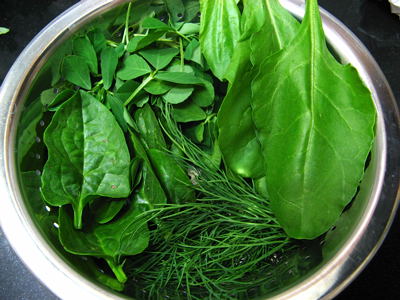
Mixed Greens - 1 cup
Toor daal - ½ cup
Fresh grated coconut - ½ cup
Salt to taste

For Seasoning:
Oil - 1 teaspoon
Mustard seeds - ½ teaspoon


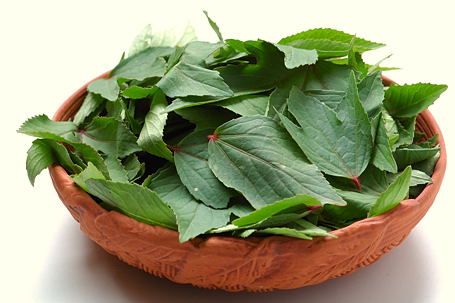
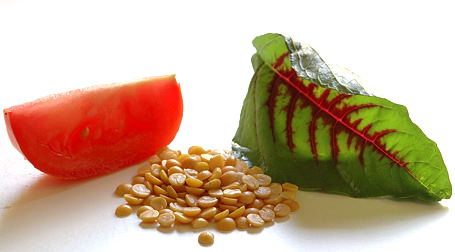
Mixed greens: Fenugreek (methi), spinach, dill (shepu), Malabar or Indian red spinach (basaLe)
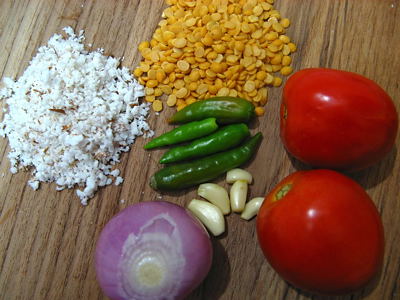

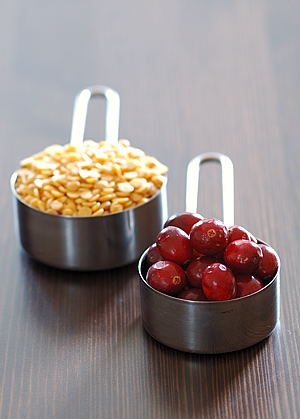
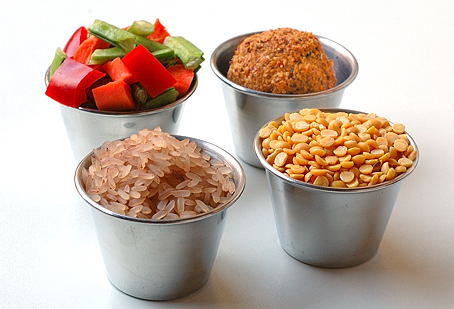
Clockwise from 12 o’clock: toor daal, tomatoes, garlic, onions, coconut. Centre: green chillies

Method:
Cook the toor daal and set aside. Roughly chop the green chillies, garlic, onions, and tomatoes. Place in a saucepan or any other cooking vessel along with a half cup of water. Cook until the vegetables are soft (about 5-10 minutes) and remove from heat. Remove the cooked vegetables with a slotted spoon, leaving the liquid in the saucepan. Once the vegetables are cool, add the coconut and grind to a paste. Add the roughly-chopped greens to the reserved liquid, and cook the greens until wilted. Cool them and run them through a mixie just once. Mix the cooked daal, the coconut-vegetable paste, and the roughly ground greens in the same saucepan, add salt, and bring it to a boil. Remove from heat. Do the tempering as usual: heat the oil, add the mustard seeds and let them splutter. Add this mixture to the daal-greens mix.

Notes:
I modified the original recipe by reducing all ingredients, except the greens, by half. While I have encountered several recipes with daal, greens, and vegetables, I like the separate cooking processes adopted here as it accounts for the differing cooking durations required for each ingredient. The complete absence of powdered spices also scored a few more points in my book. The original recipe made no mention of salt, which is probably an oversight.
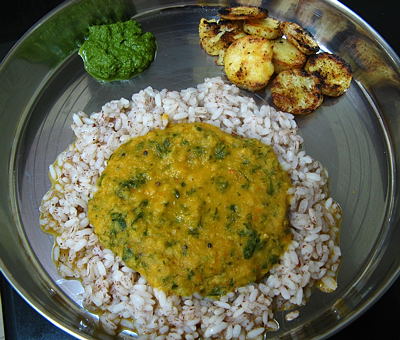

Marsoppu served with red rice, wild tuber chips, and radish-greens chutney

Text and Photographs: Veena Parrikar

Previously in the Cookery, Indic Series:

Introduction
Salads for All Occasions - Vijaya Hiremath
Cooking with Green Leafy Vegetables - Shyamala Kallianpur
Dalma

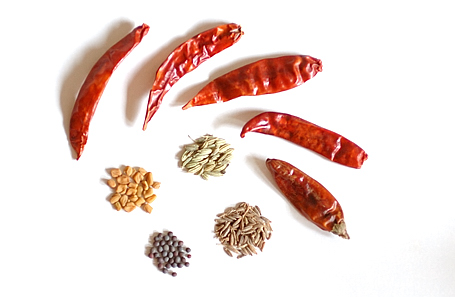
Chari Phutana and Dried Red Chillies
Chillies and Chari Phutana (Cumin, Fennel, Fenugreek and Mustard Seeds)

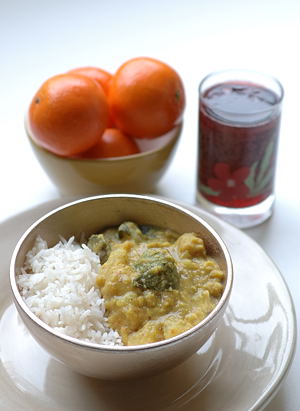
Dalma is a popular Oriya comfort food, and prepared with dal-vegetable combination. In dalma, the demure dal becomes dashing, due to a special spice-mix called chari phutana. You know how sunshine can cure winter blues? The chari phutana is the sunshine for this dal-dalma. While preparing Dalma, I realized the reason for the recent negative outburst on my website. Winter blues! No wonder people are cranky. I can’t wait for the spring and sunshine to get here.

Dalma recipe is courtesy of doctor, food writer and nutritional expert, the lovely Nandita of Saffron Trial. You can find her recipe and my photos in January edition of Men’s Health India magazine. I would like to thank Nandita, and Tithi Sarkar, the sub-editor of Men’s Health India for contacting and giving me this photo opportunity.

Dalma with Ruby Red Grapefruits
Dalma with Rice, and Ruby Red Grapefruit Juice ~ to Ease the Winter Blues

~ Indira

Sorakaya Pappu (Dudhi Dal)

Photo Purchase Keywords: Dal, Bottle Gourd
(It takes money, time, effort and energy for food photography. Please don’t photosteal. Click on the links and purchase the photos legally to digital download and to print. Thanks.)

A good many people seem to have a mental block against bottle gourd (= Sorakaya, Dudhi, Lauki). I too did have some time ago, but lately the availability of fresh looking and young vegetables at nominal price made me revisit the old classics as well as do little experimentation with bottle gourd.

The following recipe is one of many pappu (dal) arrows from my mother’s recipe quiver. If you do not like eating raw vegetables, then cook them with toor dal. That’s the common practice at my home, and also in many homes in Andhra Pradesh. It works perfectly. See, now I’m addicted to vegetable-dal combinations.

In this dal recipe, the slightly sweet bottle gourd is protein powered with toor dal, flavored with tamarind and chilli, and seasoned with tadka. Definitely, this will ease your way in any bottle gourd battle.

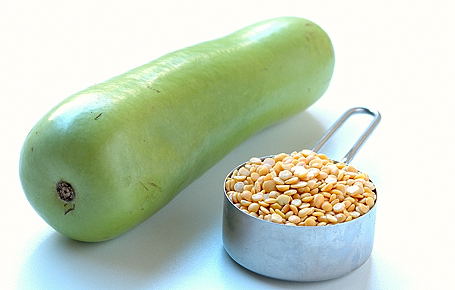
Bottle Gourd (Sorakaya, Dudhi, Lauki, Opo Squash) and Toor Dal
Bottle Gourd (Sorakaya, Dudhi, Lauki) and Toor Dal

Recipe:

¾ cup - toor dal (kandi pappu)
1½ to 2 cups - finely cubed bottle gourd (Sorakaya, Dudhi)
¼ cup - coarsely chopped onion
½ teaspoon each (or to taste)- red chilli powder and turmeric
Marble ball sized tamarind

For popu or tadka:
1 tablespoon ghee or peanut oil
6 each - curry leaves, crushed garlic
Pinch each - cumin, mustard seeds and hing (asafoetida)

Take toor dal in a pressure cooker. Rinse the dal with water. Add the bottle gourd cubes, onion, chilli powder, turmeric and tamarind. Add about one to two cups of water. Mix. Close the lid and steam-cook until toor dal reaches the fall-apart stage. Then add salt, and coarsely mash the ingredients together.

The dal benefits greatly from my daily vitamin dose, I call popu or tadka. Let’s heat ghee or oil in a vessel. Add the curry leaves and garlic. Toast them to pale brown, and then add the cumin, mustard seeds and hing. When the seeds start to pop, add the mashed dal to the vessel. Mix and serve the dal with rice or with chapati.

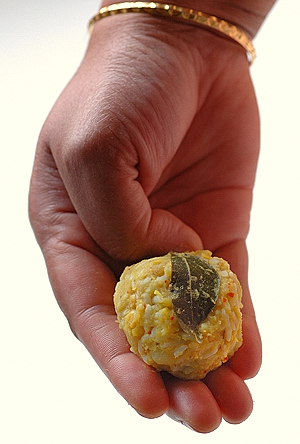
For a true Andhra experience, mix the dal with rice and ghee. Shape into small rounds like shown below. Dip them in pickle or podi. Enjoy.

Sorakaya Pappannam Mudda (Bottle Gourd Dal mixed with Rice and Shaped to a Round)
Sona Masuri Rice mixed with Sorakaya Pappu, and Shaped to a Round ~ A Bharath Experience

- Indira

Kandula Kura

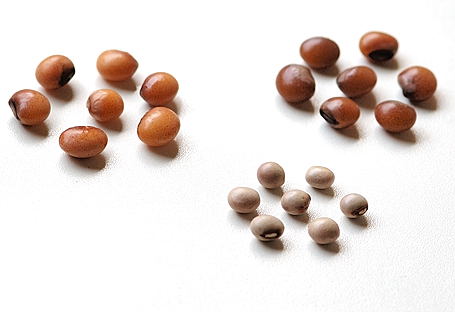
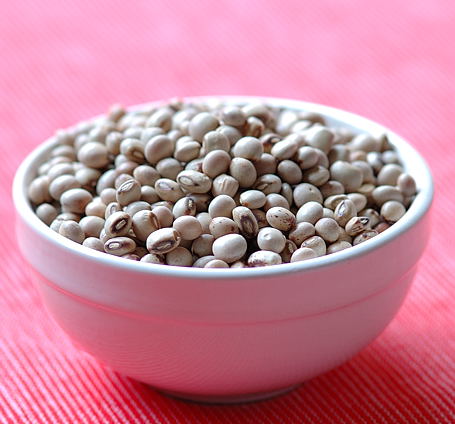
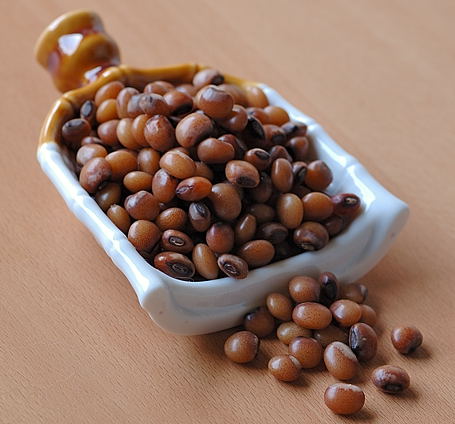
Kandulu (Whole and Dried Tuvar or Toor Beans
Kandulu (Tuvar or Toor Beans)
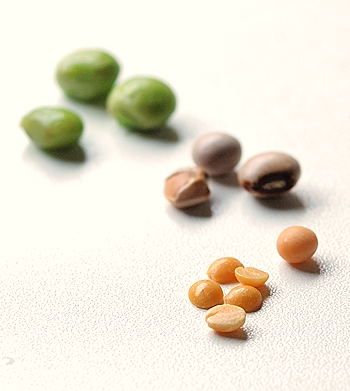
Dried Beans, Rehydrated Beans and Cooked Beans
(Clockwise from the bottom. Notice the color change)

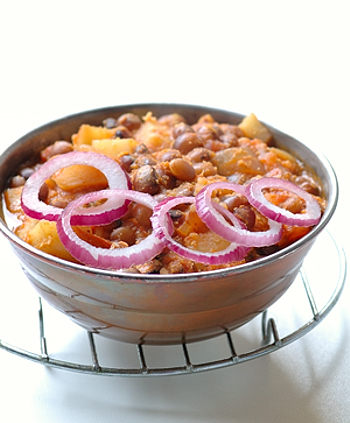
Aloo Kurma with Tuvar Beans
Kandula Kura with Potatoes ~ for Jihva

Aloo Kurma is a good thing. Add the earthy, tooth-some tuvar beans, you have something even better. A fantastic Kandula Kura substantial enough to nurture an Olympic trainer.

Posted by Indira©Copyrighted in Toor Dal, Amma & Authentic Andhra, Pumpkin (Friday December 7, 2007 at 1:12 pm- permalink)
Comments (14)

Kandulu

Kandulu (Whole Tuvar/Toor Beans - In Dried Form)
Kandulu (Tuvar or Toor Beans, in Dried Form)

Kandulu (Whole and Dried Tuvar/Toor Beans Cooked in Salted water)
Yesterday I feasted, so today I must fast.
Kandulu, Simmered in Salted Water ~ An Andhra Snack for Jihva

Toor dal ~ Fresh, Dry and Split

Toor dal (Tuvar Dal, Kandi Pappu - Fresh, Dry and Split
The Most Beautiful and Flavorful Lentil ~ Toor Dal
Fresh, Dried, and Split ~ For This Week’s Indian Kitchen

Peek Into The Past »
 

Click here to visit VedaBooks.com Veda Books.com

Click here to enter Haldiram's Store Haldiram's Store

Click here to visit Harinayak.com Click here to visit Harinayak.com Harinayak.com

Click to Visit Awesome Cuisine Website Awesome Cuisine

Click here to enter Indus Ladies forum Indus Ladies.com

click here to visit Supreme Spice Online Store About Supreme Spice

Click here to browse and place an order at Cakeworks Cakeworks

India Cookery, Food Stock Photography: Click to Browse, Digital Download and Print the Food Photographs Food Stock Photography

Mahanandi Selections: Shop at Amazon.com to Support Mahanandi Browse Amazon.Com

Support Mahanandi Amazon... Paypal...