Mahanandi

Cooking with Consciousness ~ Indi(r)a’s Recipe and Photo Journal

Karam Jeedipappu (Masala Cashews)

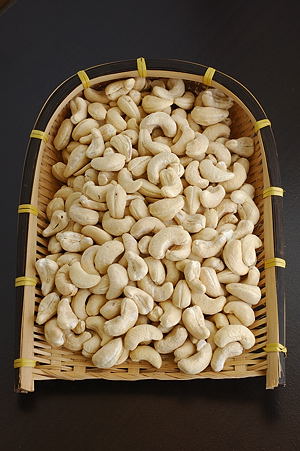
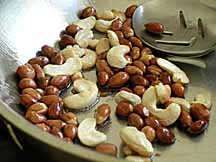
Jeedipappu (Cashews, Kaju)
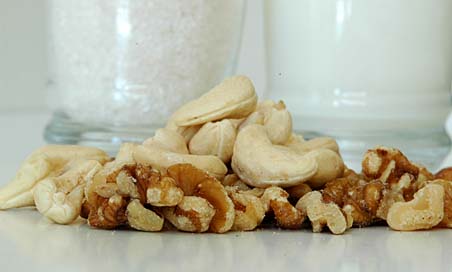
Cashews ~ Imported from India

I feel like I am also an expert in cooking. But I rarely get a chance to make something and post on this website. I have few favorites, and karam jeedipappu (can also be called masala cashews) is one of them. The process seems simple, but one has to do it a few times to get perfection.

Needed ingredients:
1. 1 lb cashews
2. 1/2 cup ghee
3. 1/2 teaspoon chilli powder
4. 1/2 teaspoon salt
6. 1 pinch powdered pepper

Needed utensils:
1 thick bottom skillet
1 vessel to mix masala
1 wide plate to spread cashews and sprinkle masala

Recipe:
Take cashews in a clean, wide plate.
Remove any small pieces or broken bits of cashews.
Heat the ghee in a wide, thick bottom skillet to medium-high heat.
Take half of the cashews and roast by continuously stirring to pale red.
Remove the cashews immediately from the skillet into a wide vessel.
Sprinkle a quarter of the masala powder on the hot cashews and shake the vessel well to spread the masala evenly on all the cashews.
Next, spread the cashews into a wide plate and sprinkle another quarter of the masala evenly on the cashews.
Repeat the process for the other half of the cashews.
Let the masala cashews cool for about an hour. Enjoy!

Notes:
Frying of cashews in ghee must be done in two batches, as the ghee would not be sufficient to roast all cashews. Care must be taken not to burn/black the cashews.
The reason why I have added masala in two stages:
When masala powder is sprinkled and tossed in the vessel first time, masala powder and all excess ghee sticks to the surface of the vessel. When cashews are spread in a wide plate and masala is sprinkled on them, masala gets coated well to the cashews.

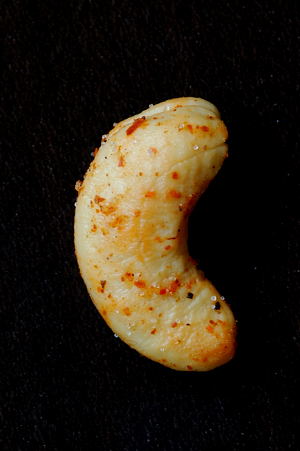
Masala Jeedipappu (Masala Cashews)
Masala Cashew ~ A Portrait

~ By Vijay Singari

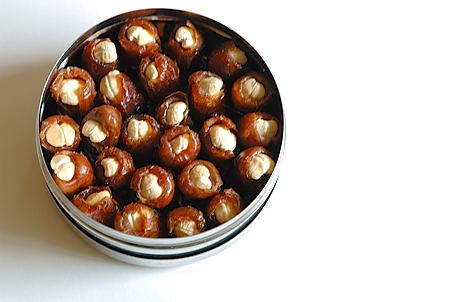
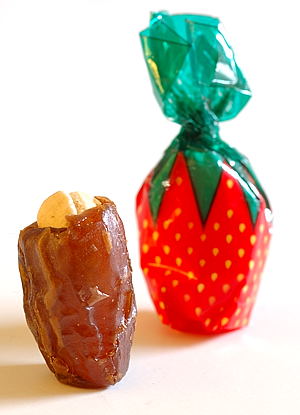
A Date with Cashew

Dates with Cashews

What could be a more delirious combination than a cashew encased in a sweet date. To my mind, nothing! Cashew-date is a pure, natural treat, and has particularly been a long tradition in Hyderabad region (Charminar area). A favorite at tens of small shops specializing in dates, dates with cashews is prepared by stuffing sweet, moist dates with fresh cashews. When you take a bite, first you would get the caramel like date and then the cashew, which balances and enhances the date experience. It’s a pleasant mini jugalbandi. Vijay and I, we both enjoy cashew-dates.

I think it would be refreshing to eat something uncooked, raw as it is given by the earth at the end of a meal before leaving the table. I believe that’s why fruit is served at the end of traditional meal. A date with cashew is another succulent way to conclude the meal with the sweet taste of Mother Earth.

Date with Cashew
A Date with Cashew ~ for Chandrika’s Date Event

How:
Moist and sweet dates - pits removed
cashews - whole, raw (or unsalted, roasted ones)
****
Gently push the cashew into the date, in place of pit.
If the dates are on the firm side, warm them in a oven/microwave for five seconds to soften. This will make the dates pliable and placing cashews will be easy. (This works on firm dates, trust me). Store them in a box, or wrap each one like a candy.
Natural pick-me uppers and also make a sweet gift to share with friends and family.

Matar Paneer with Fresh Summer Peas

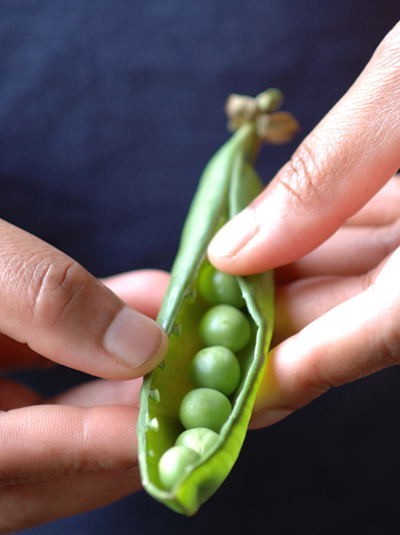
Plump and firm, fresh peas of summer are a sight to behold. Bouncing out of pods, with that smooth pearly finish in pleasant green and warm sheen, they seem fit for a necklace rather than that endless pit we call stomach.

After the classic south Indian style Guggullu, the next best recipe with freshly shelled peas is the famous north Indian specialty called “Matar Paneer”. Matar means Peas in Hindi language. There are so many different ways to prepare this recipe. Mass produced for buffet, the much-maligned style with frozen peas is sadly how most people get acquainted with matar paneer. Over-cooked in overtly-spiced sauces, poor peas and paneer would evoke pity instead of poignant piquancy. Even the hardcore buffet connoisseurs can’t help but pass the peas. Thus punished, the curry remains in the pan, to spend the night in refrigerator feeling the onion raita’s aroma, all to face another day of reheating and rejection. The sob story of restaurant style matar paneer is truly pull-at-the-heartstrings, tearjerker of bollywood.

In contrast, the home-style version is an Indian housewife’s summer romance with sweet peas. It’s a joyous celebration of nature’s bounty. Fresh cow or buffalo milk churned to paneer, a cup of peas freshly shelled from the pods, few tomatoes plucked from the vines - if you stop and think for a minute, it’s easy to imagine how the recipe originated and the reason it got so famous. A treat for dulled taste buds as well as a sight for sore eyes, fresh peas of summer make matar paneer a pleasure to savor.


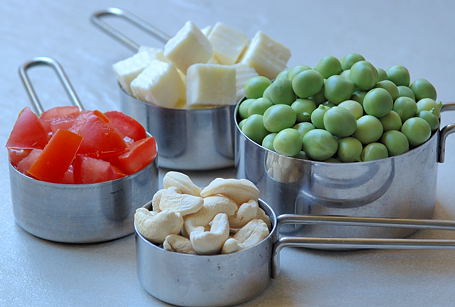
Peas, Paneer, Tomatoes and Cashews ~ Ingredients for Matar Paneer

Recipe:

1 cup fresh shelled peas
½ cup each - paneer cubes and roasted cashews
4 tomatoes and 1 onion - finely sliced
1 tablespoon - ginger, garlic and cilantro (GGC) paste
1 tablespoon - clove,cinnamon,coriander and cumin (CCCC) powder
½ tsp each - salt and turmeric (or to taste)
¼ tsp - chilli powder (or to taste)
1 teaspoon oil

Grind roasted cashews to fine powder in a mixer or spice grinder.

Heat oil in a saucepan. Add and saute finely chopped onions till translucent. Add the GGC paste, cook for few seconds. Next, tomatoes turn. Cook them till they turn to mush when pressed with the back of spoon. After spoon-mushing tomatoe pieces, stir in cashew powder, CCCC powder, salt, turmeric and chilli powder. Also green peas and paneer cubes. Add about a cup of water. Mix and simmer covered for about five to ten minutes, until the sauce thickens.

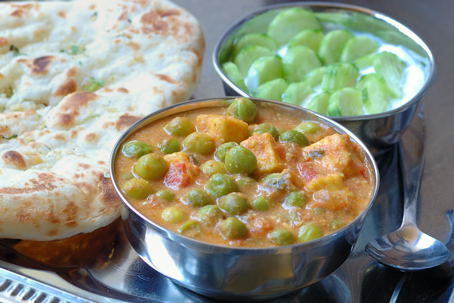
Enjoy with rice, parathas or chapatis.


Matar Paneer with Parathas and Cucumber Raita ~ Enjoying the Goodness of Seasonal Vegetables

Jackfruit~Banana Cake

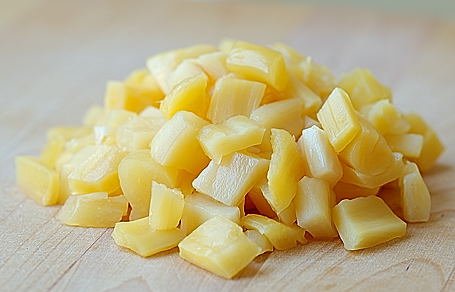
Finely Chopped Jackfruit Pieces
Jackfruit ~ Finely Chopped

Jackfruit and bananas may seem an unlikely combination, but the soothing sweetness of banana is the perfect antidote to the tingly-ness effect of jackfruit. Also, baking a coffee cake is a good way to use the surfeit of super-yield fresh jackfruit or leftover canned fruit. This is an easy as well as delicious dessert that tastes much naughtier than it really looks.

Recipe:

1. In a bowl, take 2 cups of all-purpose flour, add a cup each - finely chopped jackfruit, cashews and golden raisins. Stir in a teaspoon of baking soda, baking powder and cardamom powder. Also half cup of sugar. Mix.

2. Mash two ripe bananas to smooth paste and add to the flour mixture.

3. Add about quarter cup of melted ghee (or oil) and one to two cups of warm milk or water to the flour mixture.

4. Stir the ingredients to combine them thoroughly. Pour the batter into a greased cake pan. Level evenly.

5. Bake the cake in a preheated 350 F oven for about 30 to 40 minutes or until a knife inserted in the cake comes out clean. Cool to room temperature. Cut and serve.

This cake is like something you see at an organic aisle of bread/cake section in a grocery shop. Dense, full of fruit and nut, moist but not at all crumbly.

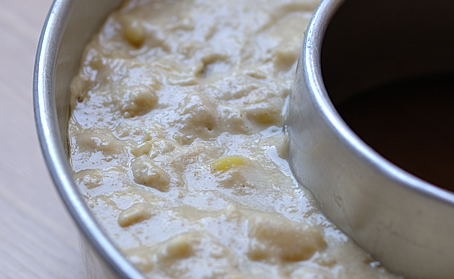
Cake Batter Ready for Baking


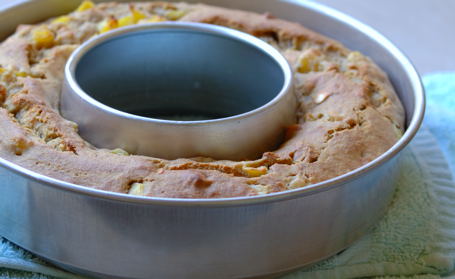
Hot Cake Fresh Out of Oven

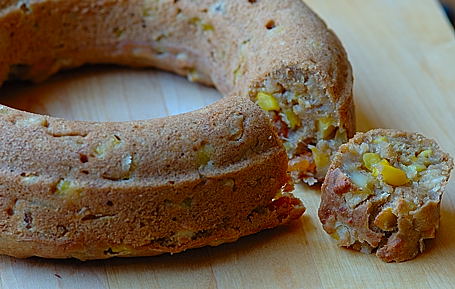
Cake Reversed onto a Plate and a Piece sliced
A Piece of Jackfruit~Banana Cake for JFI:Jackfruit at Jugalbandi


Recipe Source: My Own Creation
You can find jackfruit - fresh, frozen and canned at Asian grocery shops.

Sarson da Saag (Mustard greens, Spinach & Paneer)

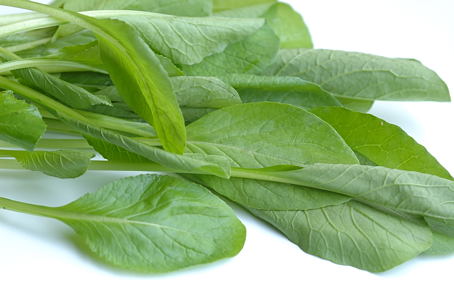
Baby Sarson (Baby Mustard Greens)
Baby Sarson (Baby Mustard Greens ~ Japanese Variety)

“Mustard greens originated in the Himalayan region of India and have been grown and consumed for more than 5,000 years. Mustard greens are a notable vegetable in many different cuisines, ranging from Chinese to Southern American. Like turnip greens, they may have become an integral part of Southern cuisine during the times of slavery, serving as a substitute for the greens that were an essential part of Western African foodways. While India, Nepal, China and Japan are among the leading producers of mustard greens, a significant amount of mustard greens are grown in the United States as well.”

- Says the WHFoods, a website which provides unbiased scientific information on nutrient-rich World’s Healthiest Foods. If you think history of this green leafy vegetable is impressive, check out the detailed nutritional information listed. It has antioxidants like Vitamins A, C, E to mineral - Magnesium, that would help to deal with lung problems (asthma) etc, - almost everything that a health(label) conscious person desires in a vegetable. Not only that mustard seeds (aavaalu) that we use regularly in our tadka and mustard oil comes from this vegetable.

When it comes to cooking mustard greens, the famous Punjabi’s ‘Sarson da Saag’, is THE recipe. Mustard Greens (Sarson Patta in Hindi), spinach and paneer along with traditional Indian seasoning are all cooked together. Like Punjabis, the end result is attractive and vibrant - in a nutshell, wholesome food experience. Give it a try!


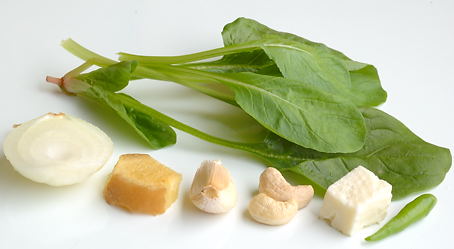
Fresh Baby Mustard Greens, Spinach, Onion, Ginger, Garlic, Cashews, Paneer, Green Chilli

Recipe:

1 bunch fresh, baby Sarson (mustard greens)- chopped
1 bunch fresh spinach - chopped
10 green chillies - small Indian variety
1 small onion - finely chopped
1 tsp of ginger-garlic paste
1 tsp of cccc powder (cumin-coriander-clove-cinnamon) or garam masala
15 cashews - roasted and powdered
15 paneer cubes - grilled or pan-fried to light gold
Limejuice to taste or 2 tablespoons
Turmeric and salt to taste or ½ tsp each

1. In a big skillet, heat a teaspoon of ghee. Add and saute the sarson, spinach and green chillies. Within 2 to 3 minutes, the leaves start to wilt and come together. Turn off the heat and remove them to a plate. Let cool and then take them in a blender or food processor. Grind to coarse paste by adding a pinch of salt.

2. In the same skillet, add and heat a teaspoon of ghee. Add and saute onions to gold color. Add and fry ginger-garlic paste for few seconds. Add pureed sarson-spinach-green chilli and half cup of water. Stir in cashew powder, garam masala, turmeric and salt. Mix thoroughly. Cover and simmer for about 10 minutes on medium-low heat. Before turning off the heat, add paneer cubes and sprinkle in limejuice.

Serve hot. Tastes great with rice and roti or chapatis.

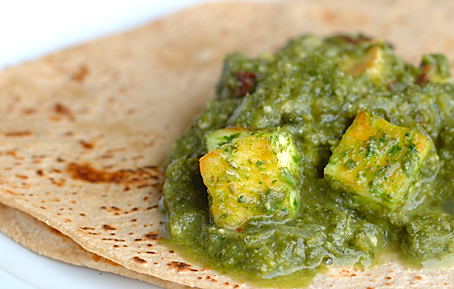
Sarson Da Saag with Chapatis
Sarson da Saag with Chapatis.

I purchased these fresh, baby mustard greens from an Asian grocery shop (Uwajimaya).
Recipe adapted from: Basant. I have added cashews to bring some nutty sweetness to the curry.

Banana Halwa (Nenthra Pazham Haluva)

For Independence Day Food Parade, following recipe is contributed by the regular comment poster at “Mahanandi”, always entertaining ‘Kerala Girl (KG)’:

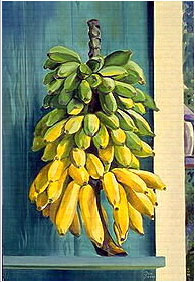
Banana Painting  - From My Home
Oil Painting of Bananas

I have chosen a dish from my hometown - Calicut/Kozhikode (land of Banana chips and Halwas) from Kerala for IDFP. Kerala - the God’s own country is also land of Kera (coconut). To a malayalee, banana or the plantains probably come next to coconut but still it’s importance is written all over the malayalee’s life. Banana is one plant whose every part is useful in one or the other form. In addition to the banana fruit we also eat it’s flowers and the softer inner trunk. The leaves of the banana plant are the less sophisticated version of today’s disposable plates. Traditional Kerala cuisine is incomplete without the pleasant taste of bananas.

Another reason why I have chosen banana as ingredient for this event is I hail from Calicut - the land famous for Calicut Halwa and one of the best halwa’s I have tasted there is banana halwa (a hard jelly like sweet). Calicut is very famous for its sweets and one the famous places in Calicut is Sweet Meat Street (SM Street). It is the busiest street in Calicut and derives its name from the times when the street was lined with sweetmeat stalls. So I thought of celebrating our independence with my favorite sweet - Banana Halwa (Nenthra Pazham Haluva). The recipe source is one of the old recipe books by the great cookbook author Mrs.K.M.Mathew. Here’s the recipe:

Ingredients:

Ripe Bananas - 1 and 1/2 Bananas
Sugar - 2 and 1/2 cups
Water - 1/2 cup
Lemon juice - 1/4 cup
Ghee - 3/4 cup
Cardamom powder - 1/4 tsp
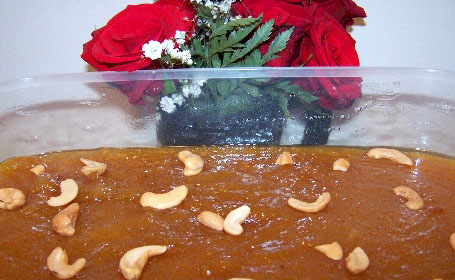
Cashews roasted or plain - handful for decoration
All purpose flour - 3 tsp

Method:

Pressure-cook the bananas until soft. Remove the outer skin and deseed (remove the black layer inside). Mash the bananas to a paste in a food processor or blender.

Make syrup of sugar by dissolving in 1/2 cup of water. It should be of string consistency. When this consistency is reached add the lemon juice and again allow it to reach the same thick consistency. To this add the mashed bananas.

To thicken the halwa, at this stage add flour dissolved in 1/4 cup water. Keep on stirring the mix to attain a thick mass. Add ghee little by little. When this becomes a thick mass add the cardamom powder. Mix well and pour into a pan greased with ghee. Decorate with cashews.
When cool cut and enjoy. This can be stored in refrigerator for a week minimum.

A Toast to our independence with this sweet dish!

Banana Halwa
Banana Halwa for IDFP

~ Guest Post by Kerala Girl (KG)

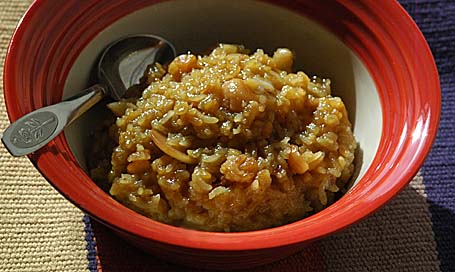
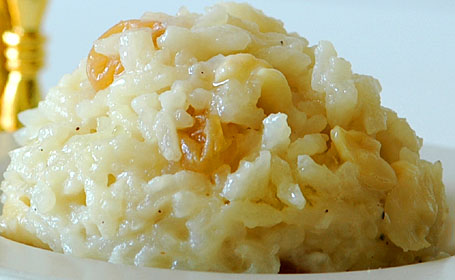
Paramannam (Sweet Rice)


Paramannam Prasadam for Indian Sweets 101

Recipe:

6 cups of milk
2 cups of cooked rice
1 cup of sugar/powdered jaggery or to taste
¼ cup of - golden raisins and cashews together, roasted in ghee
4 cardamom pods - seeds powdered
1 tablespoon of ghee

In a large, thick-bottomed saucepan, combine milk and sugar (or jaggery). Cook until sugar melts and milk thickens (just a little bit). Add cooked rice, cashews, golden raisins, cardamom powder and ghee. Mix thoroughly and cook on medium-low heat for about 15 minutes, stirring in-between, until the whole thing comes together. Turn off the heat. Keep it covered for few minutes. Paramannam further thickens on cooling. Serve warm or for a cool refreshing taste, refrigerate for about one hour.

Pongal (Pongali)

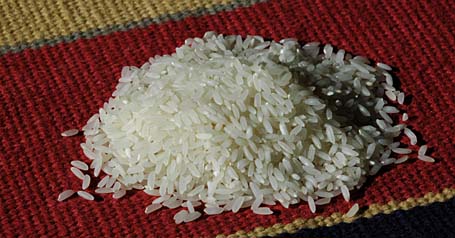
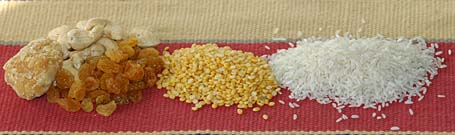
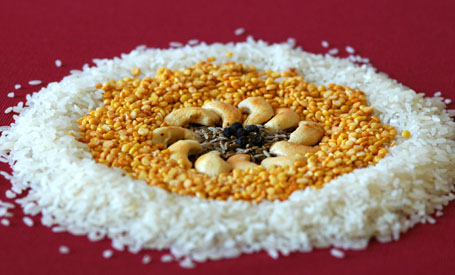
Rice, Roasted Yellow Moong Dal, Roasted Cashews, Cumin and Peppercorn
Sona Masuri Rice, Roasted Yellow Moong Dal, Roasted Cashews, Cumin and Peppercorn

Some foods are simply divine, pongal belongs to that category. There isn’t anything quite like pongal! Creamy and luxurious rice dish that you get by cooking rice with toasted moong dal in little bit of ghee. Lots of water, sometimes milk is added and seasoned with cumin, black peppercorn and salt. The whole mix is cooked in a big pot until the rice and dal are soft. Roasted cashews are sprinkled at the end. This simple dish is so fragrant, the whole house will be filled with wonderful aroma. And the taste, I won’t gush but I will say this; it’s often prepared and offered to Gods in temples. Can we, mere mortals resist the pongal temptation? I don’t think so!

Pittsburgh’s Sri Venkateswara Temple serves the best pongal I have ever tasted out side India. At the temple’s kitchen, the chef prepares pongal in a big caldron following the traditional method. The secret is not only quality ingredients but also the method of cooking, no pressure-cookers there. I think that’s why temple pongal tastes so good. Since last year I have been preparing pongal in a big pot and stopped cooking it in pressure cooker. The difference in taste is tremendous and surprisingly the preparation is also easy.

Here is my recipe:
(for two)

1½ cup rice (preferably Sona Masuri)
1 cup yellow moong dal
2 tablespoon of ghee
1 tsp of cumin
½ tsp of black peppercorn
1 tsp of salt
½ cup of cashews
7 cups of water and
I also add 2 cups of milk (my preference and optional)
A big sturdy pot (Big sauce pan)


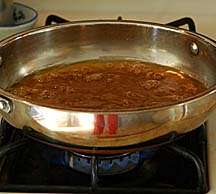
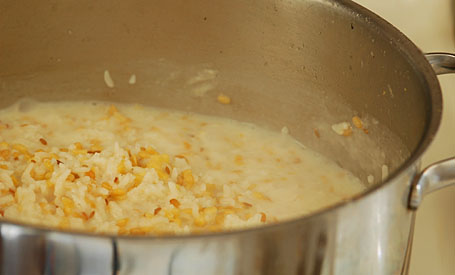
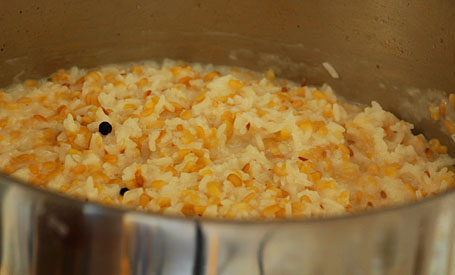
Pongal - Starting Point


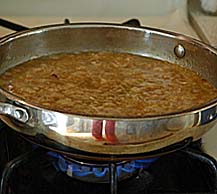
Pongal - After 15 minutes of cooking


Pongal - at 20 minutes of cooking

1. Heat a teaspoon of ghee in an iron skillet on medium heat. Add and roast moong dal to golden color, constantly mixing. Take care not to black. Remove them to a plate. In the same skillet heat another teaspoon of ghee. Add and roast cashews to golden.

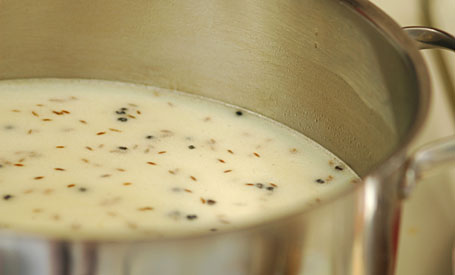
2. In a big sturdy pot, heat a tablespoon of ghee. Add and toast cumin and black peppercorn for few minutes. Stir in the toasted moong dal and rice. Mix them with ghee for few minutes. Pour water and milk and stir in salt. Cover the pot with lid and cook on high heat. Within 10 to 15 minutes, you will see the water gurgling and trying to lift the pot lid. At this stage, remove the lid. Mix the cooking mixture once and partially cover the pot with lid, leaving little bit of gap for water vapor to escape.

3. Within 5 minutes, you will see whole thing coming together. Rice-dal mixture will be doubled in volume. Each grain will be plumped but not broken open. Turn off the heat, and stir in roasted cashews. Close the lid fully and let the rice sit for about 10 minutes. At this stage, you can stir in more ghee if you want to and also add salt to suit your taste.

Rice-dal mixture absorbs the remaining water-milk liquid and becomes little bit tight. Pongal’s consistency can vary from something resembling a thick soup to a creamy porridge, but never like a tight hard ball. Resist the temptation to overcook and turn off heat early.

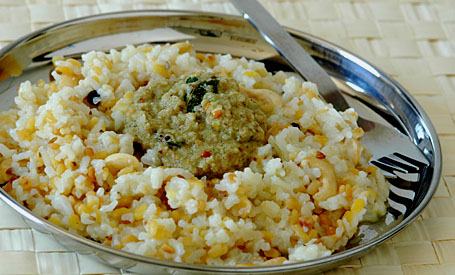
Usually we will have this pongal with chutney, potato kurma or with a cup of yogurt depending on the time of the day.


Pongal with Coconut Chutney ~ Traditional Indian breakfast
My first entry to JFI - Dal hosted by Sailu of Sailu’s Food and also to Paz’s For the Love of Rice


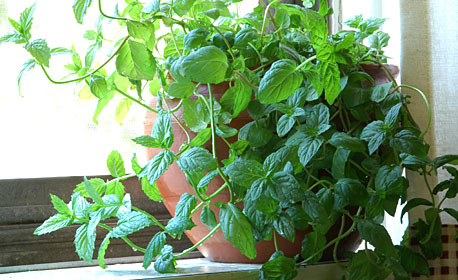
Along with cumin and black peppercorn, curry leaves are also added to the ghee. I didn’t have any curry leaves when I prepared this recipe so the omission.

Previous Page »